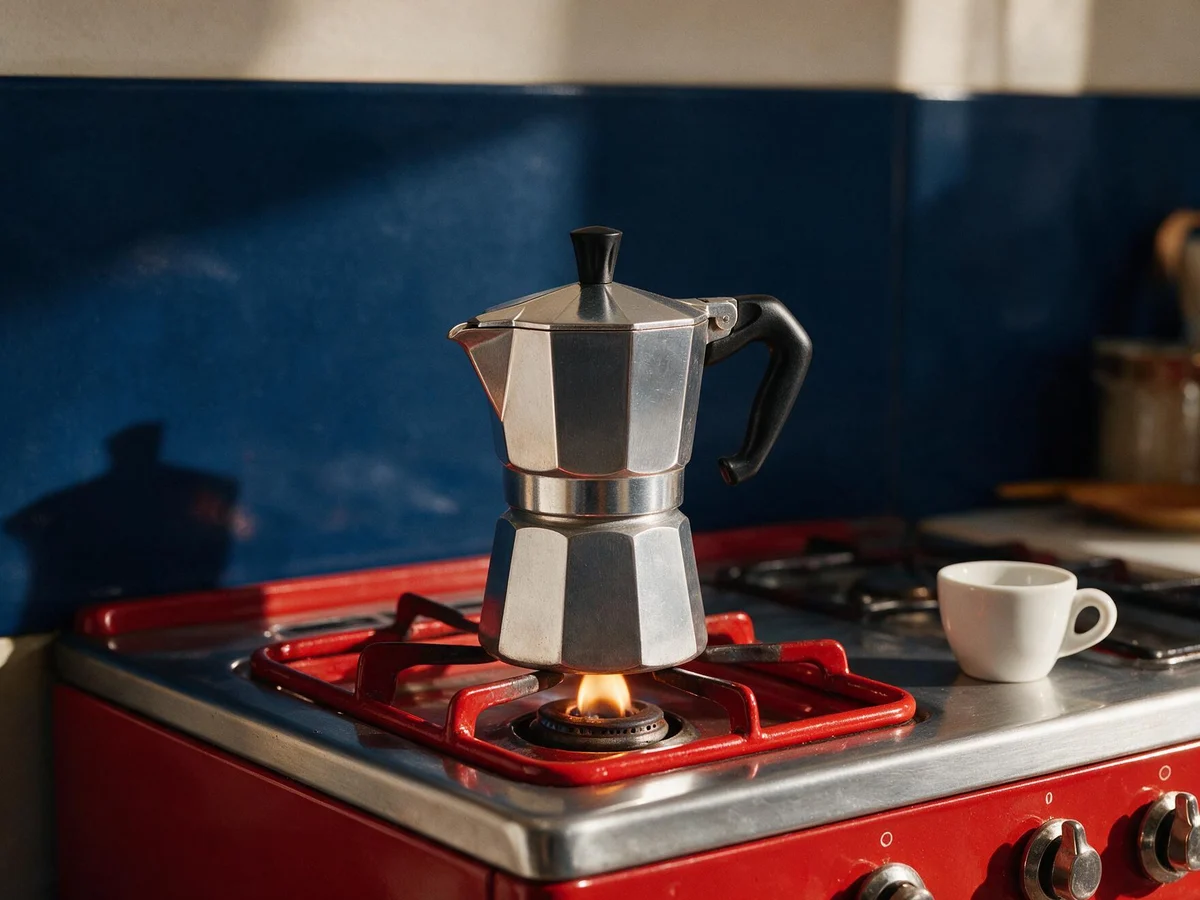
A Moka Pot is designed around the size of its boiler and basket, so the most repeatable recipe is simple: fill water to just below the safety valve, fill the basket level without tamping, and brew over low-to-medium heat for about 3–6 minutes.
3-cup Moka Pot recipe at a glance
| Coffee | Fill the basket level; usually about 15–17 g |
|---|---|
| Water | Room-temperature water just below the valve; measure your pot once |
| Grind | Fine, but coarser than espresso |
| Heat | Low to medium; flame no wider than the base |
| Total time | About 3–6 minutes |
| Stop | Remove from heat when the top is full or as sputtering begins |
The 15–17 g dose is a practical estimate for many three-cup pots, not a universal specification. Basket capacity changes by model, coffee density, and grind. On your first brew, weigh the level, untamped basket and the water at the valve; those are your pot’s repeatable numbers.
What you need
- A correctly sized Moka Pot with a clean gasket, filter plate, funnel, and unobstructed safety valve
- Fresh coffee ground finer than drip but not powdery like traditional espresso
- Clean, room-temperature water
- A scale if you want to record your pot’s capacity
How to make Moka Pot coffee
- Inspect the pot. The safety valve must move freely and remain above the waterline. The gasket and filter should be clean and seated correctly.
- Add room-temperature water. Fill the lower chamber to just below the safety valve. Never cover the valve.
- Fill the funnel basket. Add Moka-ground coffee to the rim, level it gently, and wipe loose grounds from the edge. Do not tamp or compress the coffee.
- Assemble firmly. Insert the basket and screw the top and bottom together so the gasket seals. Do not use the handle as leverage.
- Use low-to-medium heat. Center the pot. On gas, keep the flame under the base rather than up the sides.
- Listen and watch. Coffee should emerge in a controlled stream. Remove the pot from heat when the upper chamber is full or the stream turns pale and begins to sputter.
- Stir before serving. A quick stir blends the stronger early coffee with the lighter liquid brewed later.
Why there is no single Moka Pot ratio
Unlike a pour-over, a Moka Pot is not meant to be half-filled or freely scaled. The water space creates pressure, the safety valve must remain clear, and the full basket provides the intended resistance. Choose the pot size for the amount you want to make, then use its full basket and valve-defined water level.
Moka Pot troubleshooting
| Problem | Likely cause | What to do |
|---|---|---|
| Bitter or burnt | Heat too high or pot left sputtering | Use lower heat and remove earlier |
| Sour or thin | Grind too coarse or coffee stale | Grind slightly finer and use fresher coffee |
| Violent sputtering | Excess heat, poor seal, or channeling | Lower heat; inspect gasket, rim, and basket fill |
| No coffee emerges | Heat too low, blocked path, grind too fine, or tamped basket | Remove from heat, cool completely, then inspect—never open a pressurized pot |
| Steam leaks from the joint | Dirty rim, worn gasket, or loose assembly | Cool completely, clean the rim, and replace worn parts |
Should you start with hot water?
Some specialty recipes preheat the boiler water to shorten the coffee’s exposure to the hot metal. For beginners, we recommend Bialetti’s room-temperature method first: it is simpler, avoids assembling a very hot base, and follows the manufacturer’s intended workflow. Once your technique is consistent, you can compare a preheated-water method while using heat protection and keeping the safety valve unobstructed.
Cleaning and safety
- Let the pot cool completely before opening it.
- Follow the manual for your exact material and model. Bialetti directs Moka Express owners to hand wash and avoid a dishwasher.
- Keep the funnel, filter plate, gasket, and safety valve clean; replace worn parts.
- Never tamp the basket, overfill the boiler, cover the valve, or force open a hot pressurized pot.
Moka coffee is concentrated, but it is not espresso: it uses lower pressure and a pot-defined recipe. For water choices and scale prevention, see our coffee brewing water guide. If you use a pump machine, the Barista Express dial-in guide explains the very different 1:2 espresso workflow.