I left Colombia in 1995. I was eight years old. It took me twenty-seven years to go back, and when I finally did, it was to look at coffee.
Nobody warns you about the particular vertigo of returning to a country you left as a child. You are not a tourist, exactly. You are also plainly not a local. You have the passport and the surname and none of the muscle memory, and somewhere over the Caribbean it occurs to you that the place you have been carrying around in your head for twenty-seven years was assembled by an eight-year-old and has never once been fact-checked.
The invitation came from Henry Wilson — a friend, and the founder of Perfect Daily Grind. Come to Colombia, he said. Come look at some coffee.
By then I had been working in specialty coffee since 2015. Seven years of tasting it, consulting on the technical end of it, writing about it with what I would describe as total confidence. Seven years of talking about a crop I had never once watched anybody pick.
So: twenty-seven years owed to a country, seven owed to a plant. One trip, two debts. We went to Concordia, in the southwest of Antioquia, to a farm called El Zacatín.
The road in
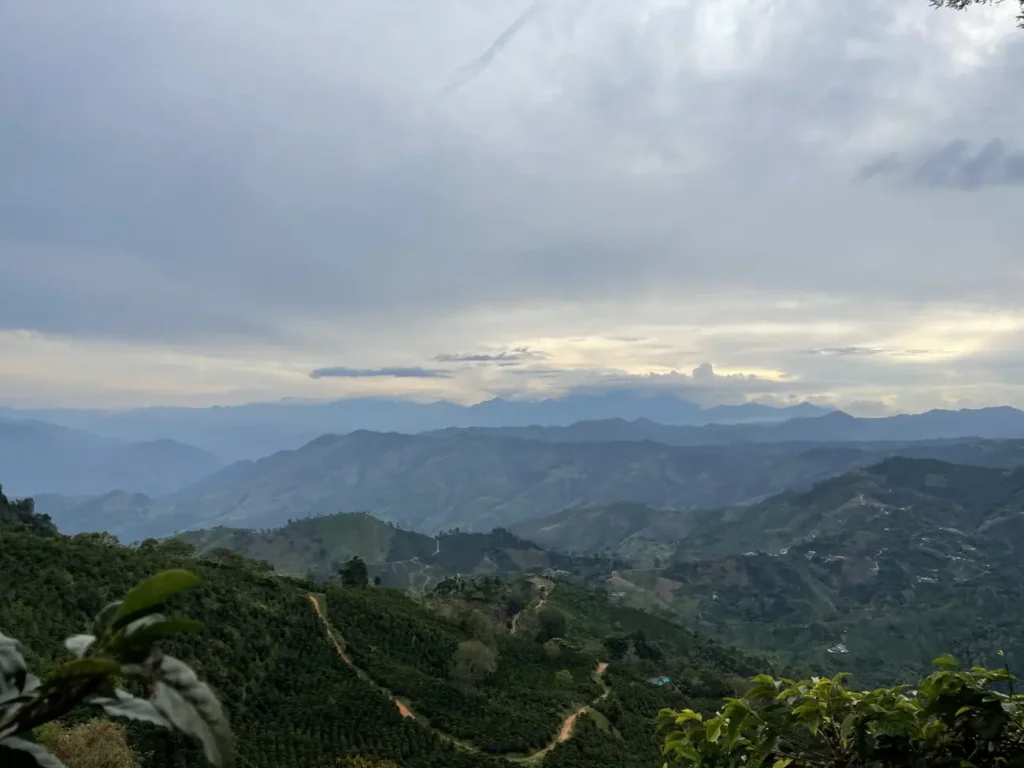
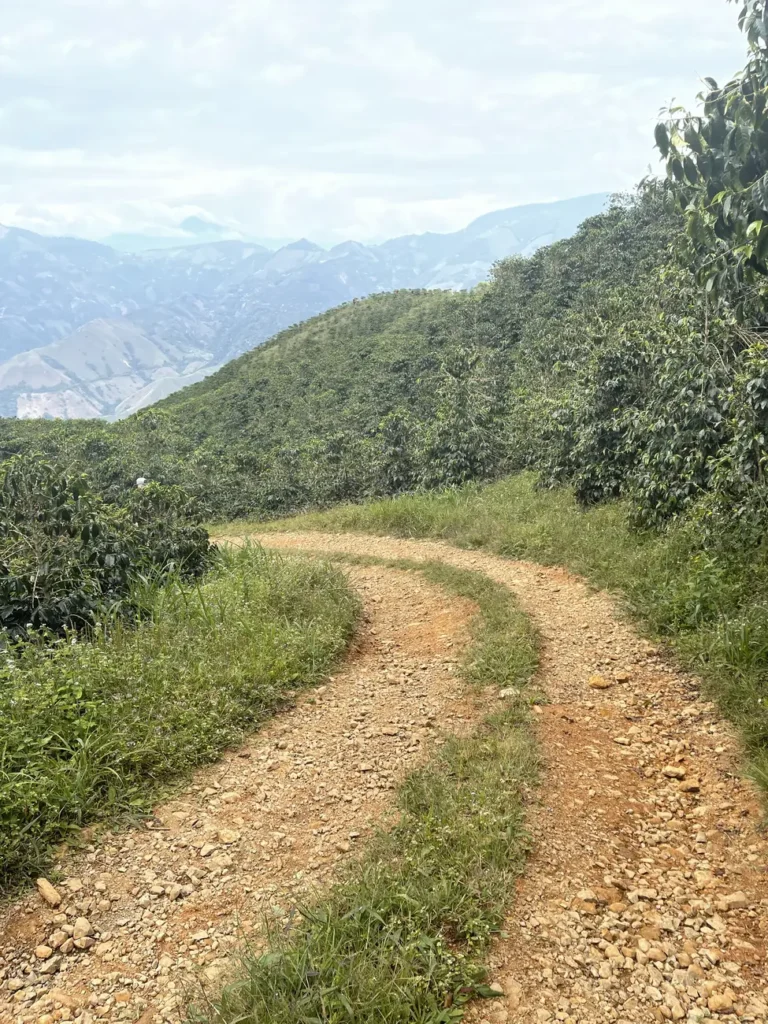
Concordia is a couple of hours southwest of Medellín, and it is the last stretch that does the work. The valley closes. The road narrows and starts folding back on itself, and the land on both sides turns into coffee — not in the tidy rectangles you would draw if you were inventing a farm, but poured down slopes at angles that look like a surveying error until you understand that steep, high and cool is the entire point.
Every photograph I took on that trip wrote down where it was standing. I did not think about that at the time. Two days of driving, walking and getting lost, quietly logged. This is what those coordinates draw.
Two farms, one town, and about eight kilometres of mountain in between. On the first afternoon we went southeast and downhill, into the older blocks, the nursery and the wet mill. The second day we went northwest and up, to the high ground where the picking was happening. In between, both nights, Concordia.
Concordia
The town is small, vertical and painted in colours that would look insane anywhere else and look completely correct here. Balconies stacked over a plaza. Motorbikes. A church at the bottom of the hill that everything else leans towards. A mural on a café wall of a picker and a drum, which is not a piece of tourist board whimsy — it is a statement of what pays for the town.
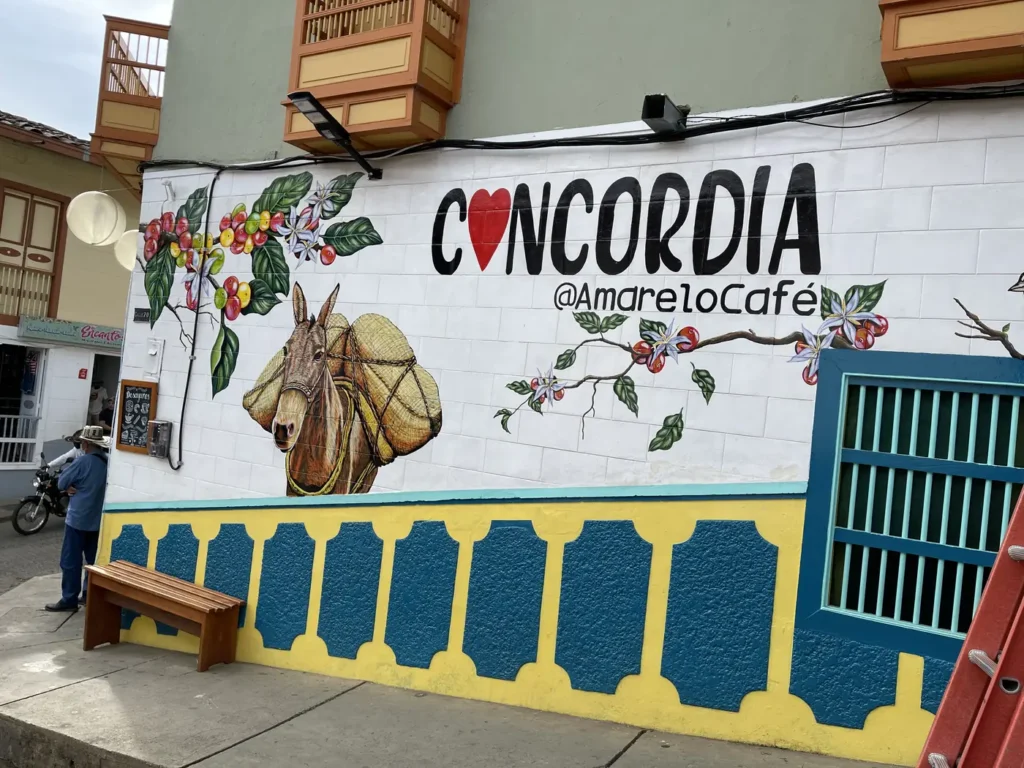
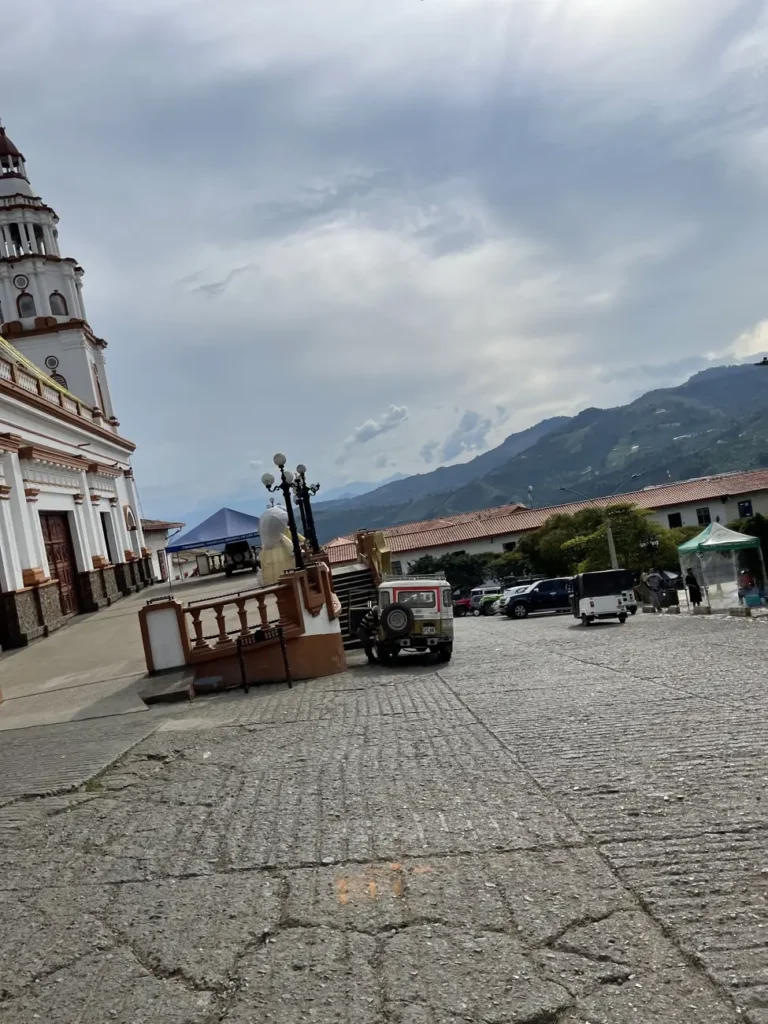
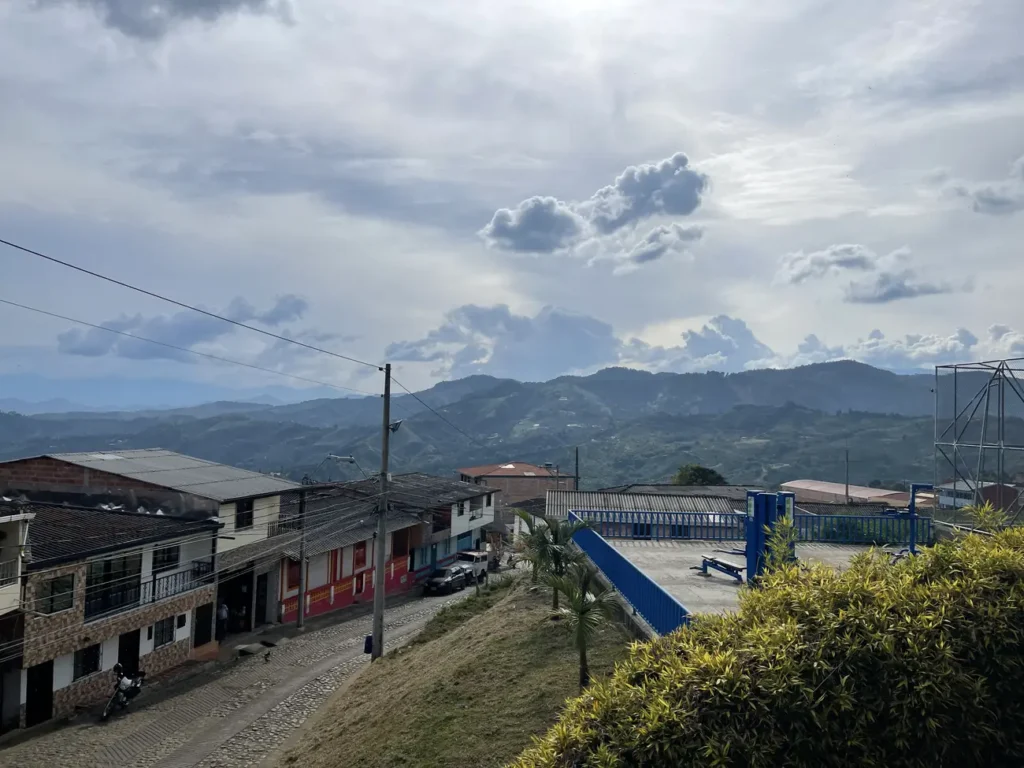
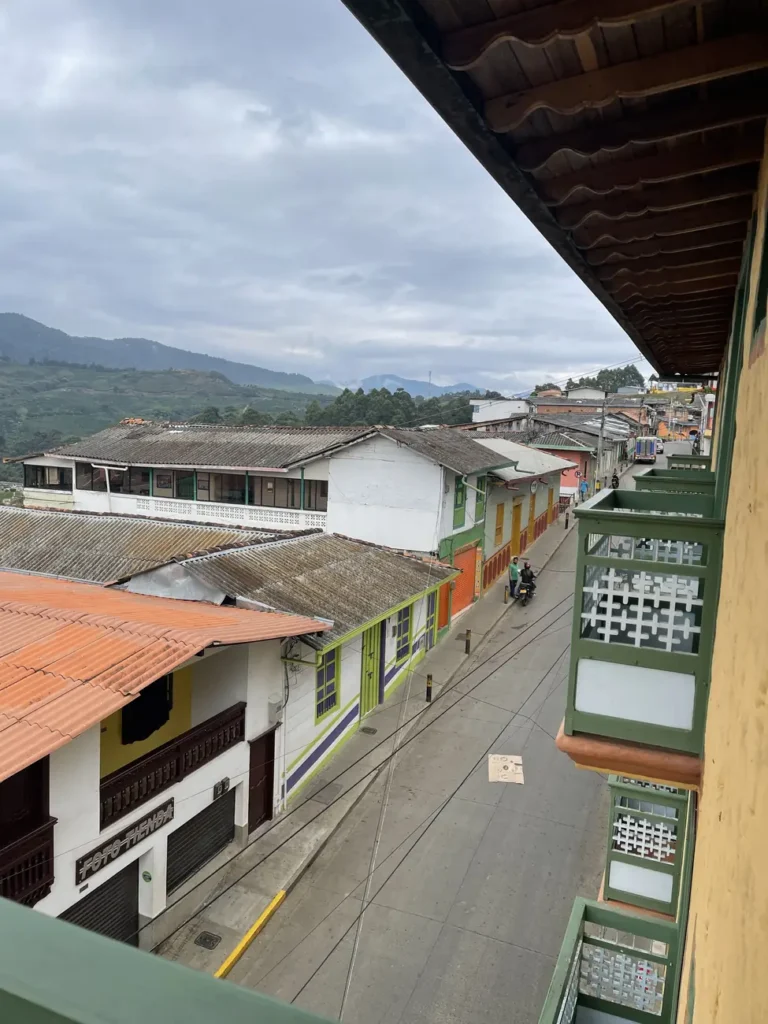
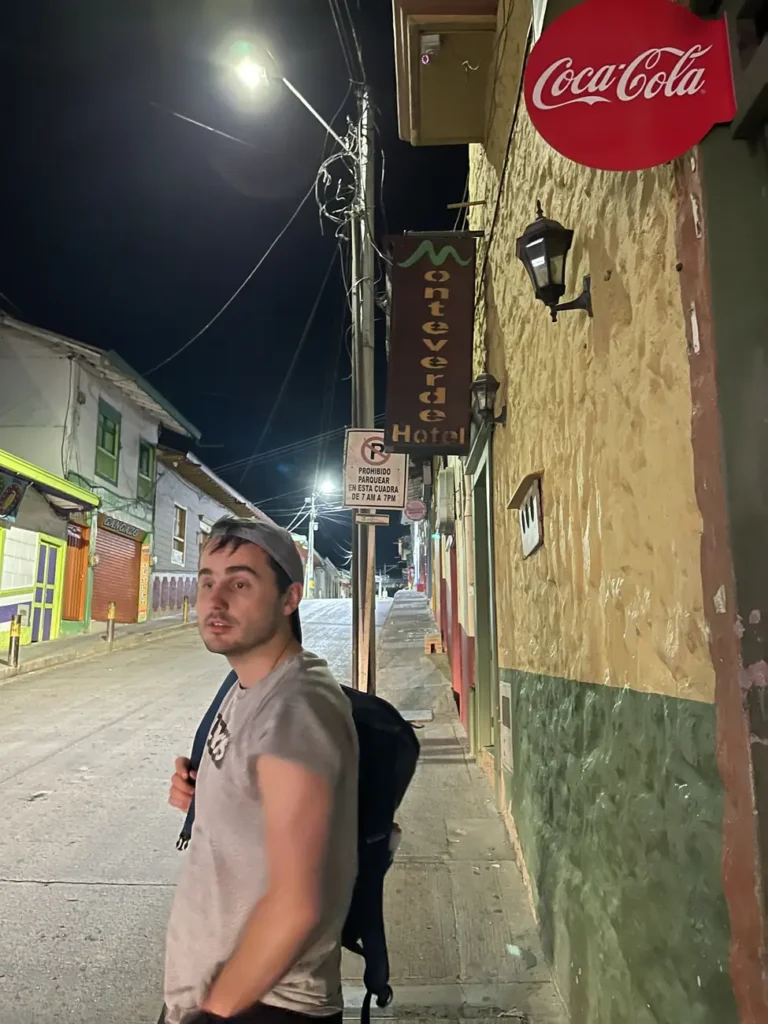
Mid-morning on a Concordia street, from the balcony above it — and the same town by daylight and after dark.
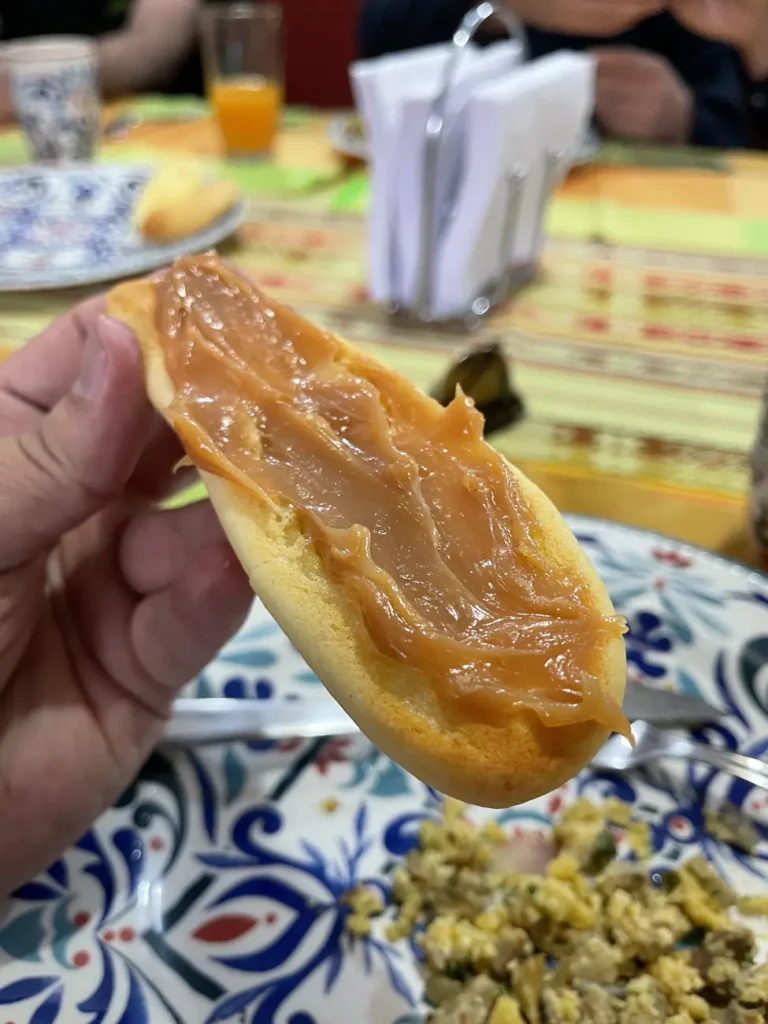
The rhythm of the place is agricultural, which means it is not built around anybody’s weekend. Trucks come down loaded. Men stand in doorways at four in the afternoon having conversations that have clearly been running for years. Dogs conduct their own affairs. Somebody hands you a bread roll split and filled with arequipe and you eat it standing up, and it is so sweet it makes your teeth ring, and you have another one.
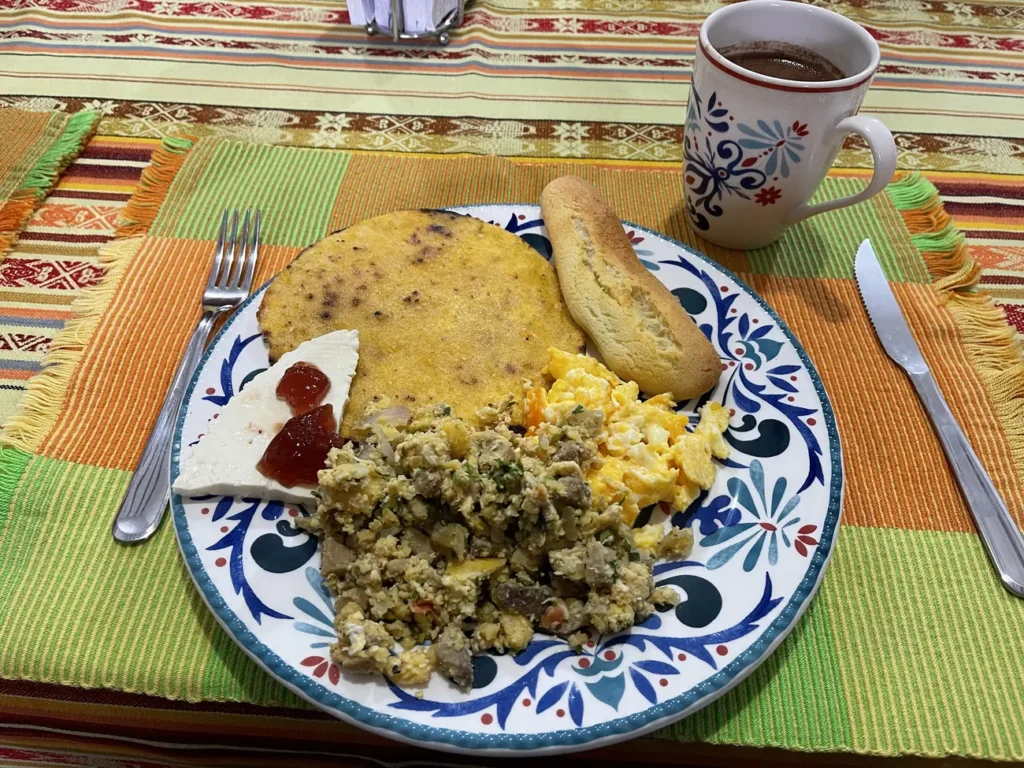
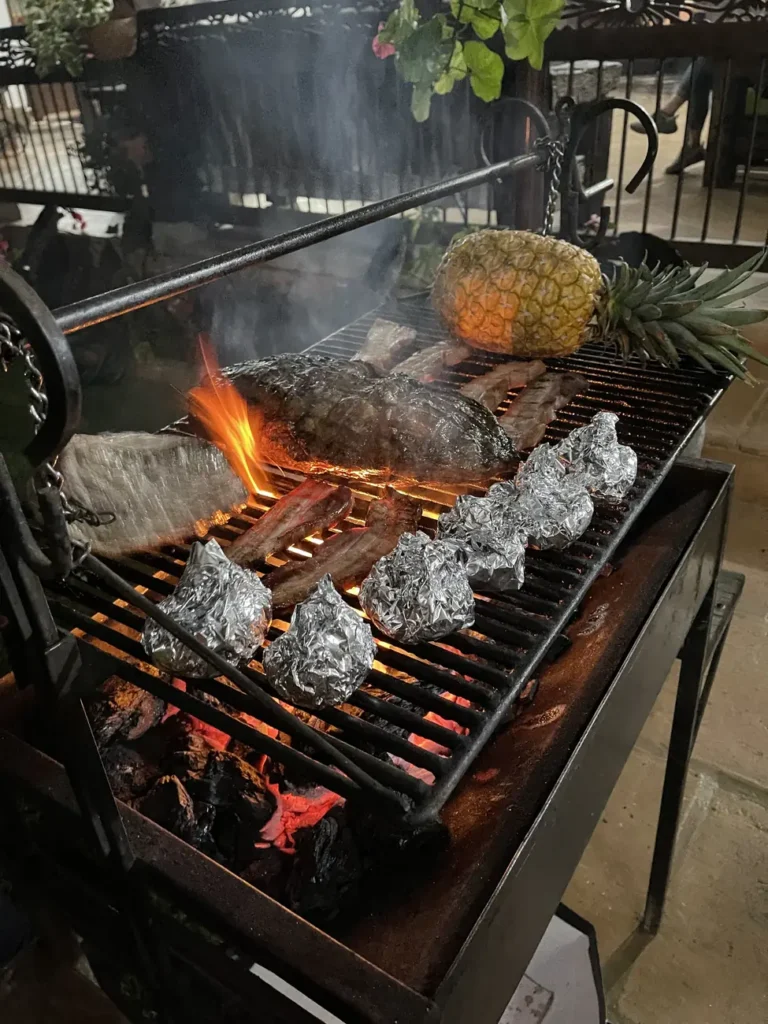
I want to be careful here, because this is the part where a certain kind of writer starts reaching for words like authentic. Concordia is not a set. It is a working town in a coffee-growing municipality, and most of the people in it were at work. What struck me was not that it was picturesque. It was that all of it — the trucks, the murals, the mountain of paperwork somebody was doing in a doorway — sits downstream of a red fruit growing on a hill.
Where a coffee tree actually starts
The first afternoon, before the slopes or the mill or anything that photographs well, Eduardo Fernández-Restrepo took us to the nursery.
Eduardo is the third generation of his family on this land. El Zacatín runs eighteen hectares, seventeen of them planted, between 2,000 and 2,175 metres. The name is not his invention — it was borrowed from a craft liquor maker founded in Concordia in the early 1920s, which tells you something about how long people here have been putting a name on what they make.
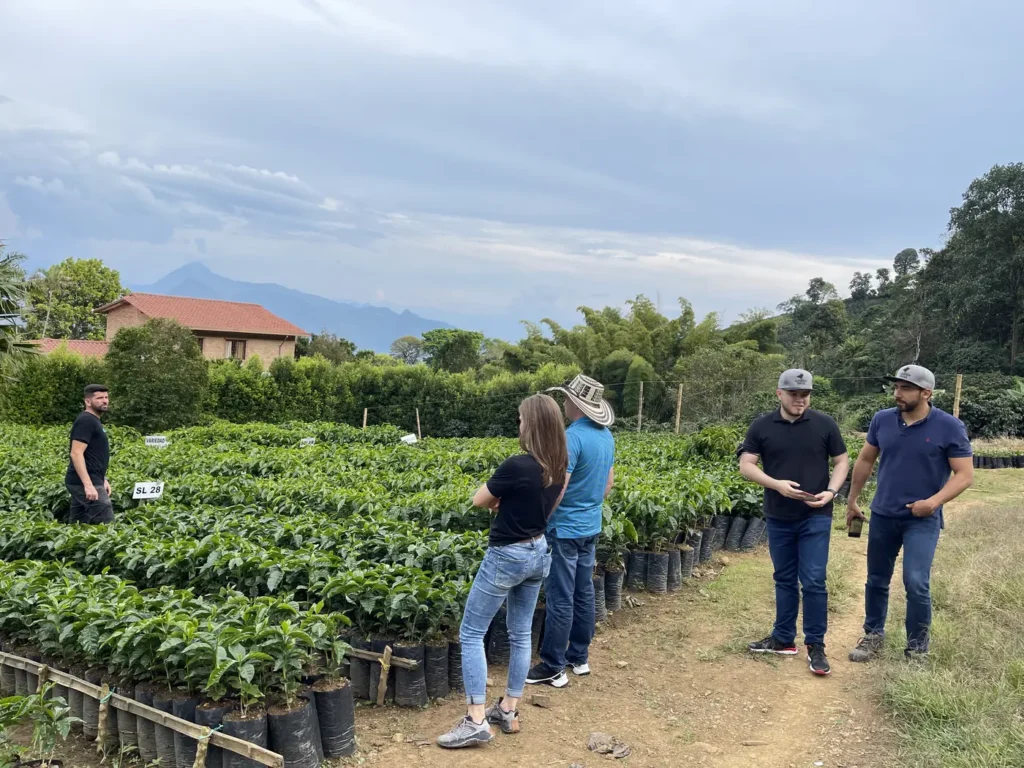
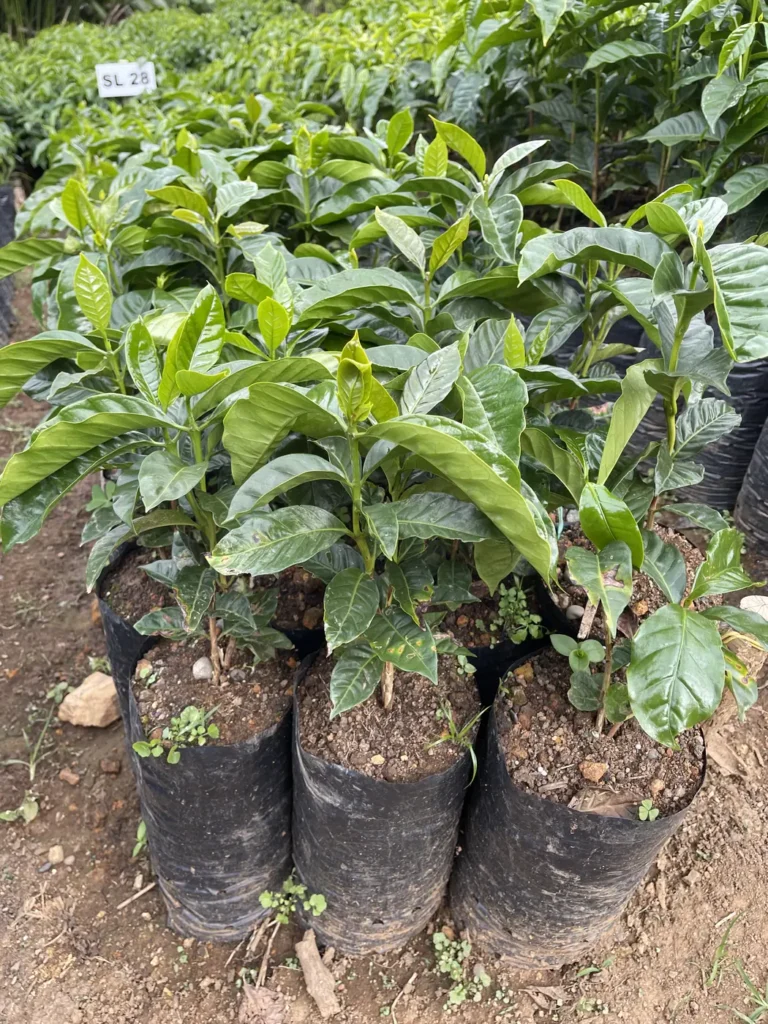
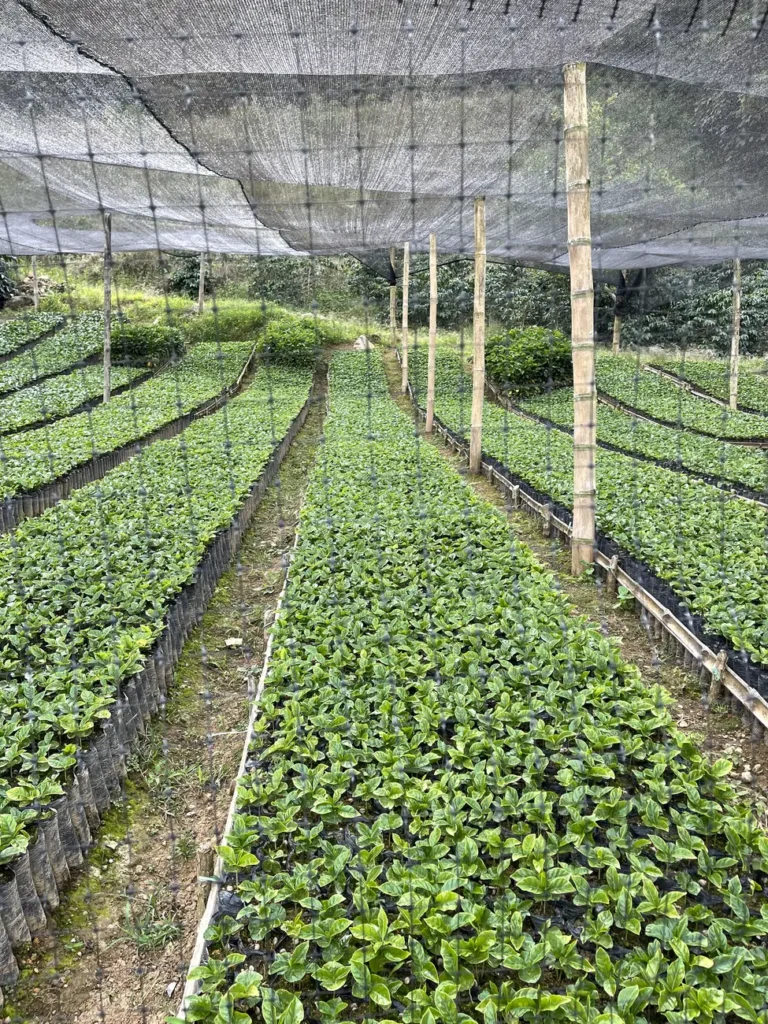
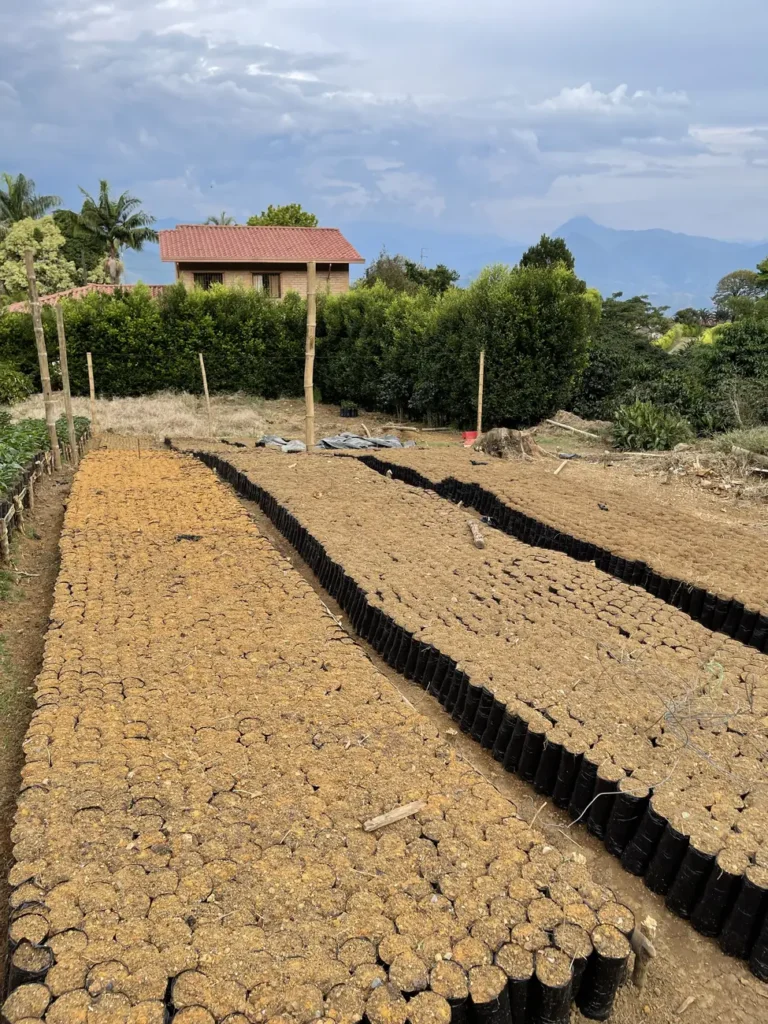
Rows of seedlings in black bags under shade netting. It is the least dramatic thing on the property and it reorganised how I think about the entire business. A seedling sits here for months before it goes out to the slope, and then roughly three years in the ground before it gives you a harvest worth picking. Which means the decision being made in this shed — this variety, on that hillside — pays out for the first time three years from now, and then keeps paying, or keeps not paying, for the next twenty.
I roast coffee. My feedback loop is eleven minutes long. Standing in that nursery I did the arithmetic on mine against his and felt, briefly, ridiculous.
Flowers and fruit, at the same time
Then the thing I was not ready for.
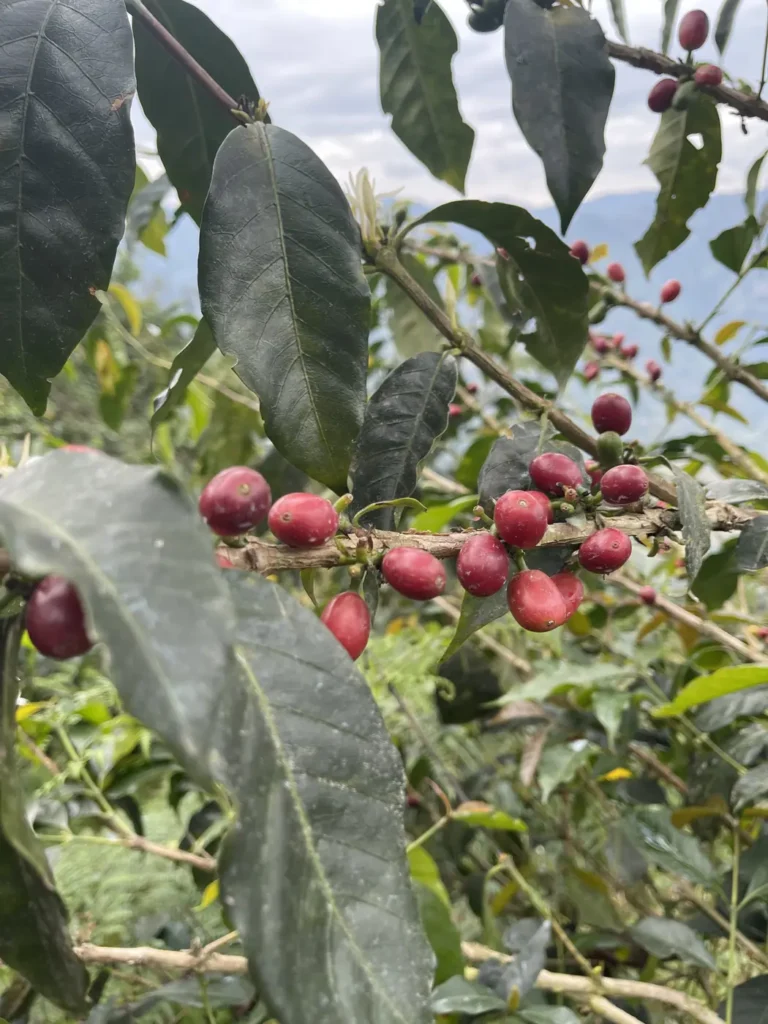
On the same trees, in the same week, there were white flowers opening and cherries ready to pick. Coffee blossom looks like jasmine and smells like it and is gone in a couple of days, and I had been looking at photographs of it for years without once registering what it implies: a coffee tree is not a wheat field. It does not ripen. It carries three or four different futures on the same branch, simultaneously, all year.
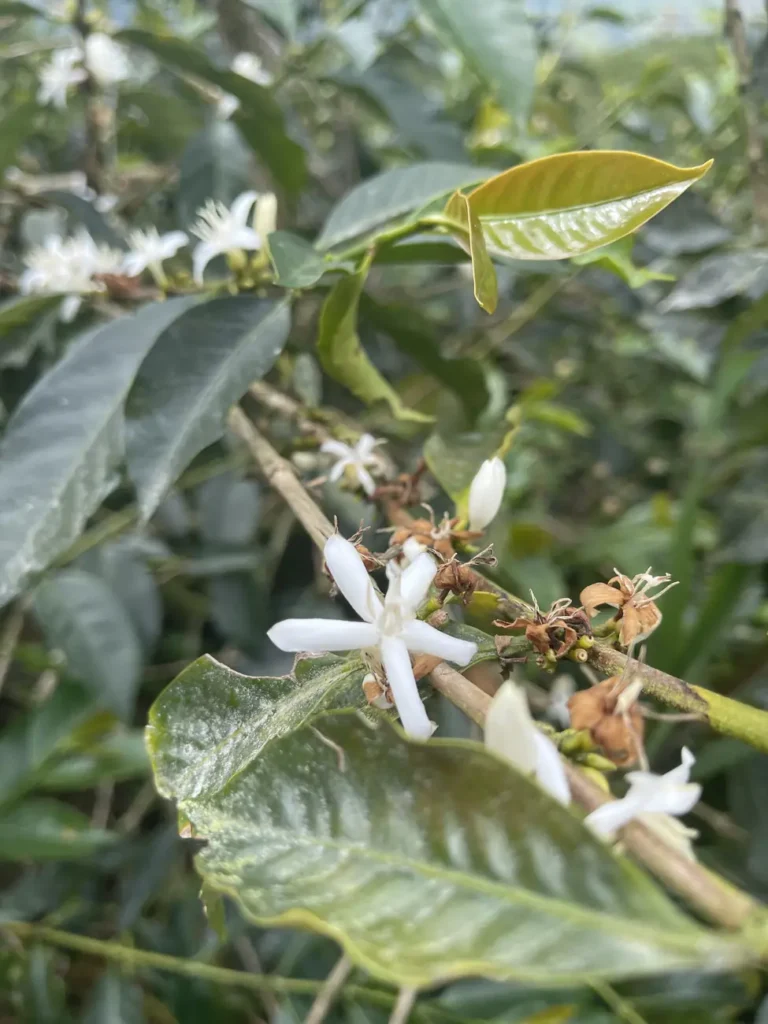
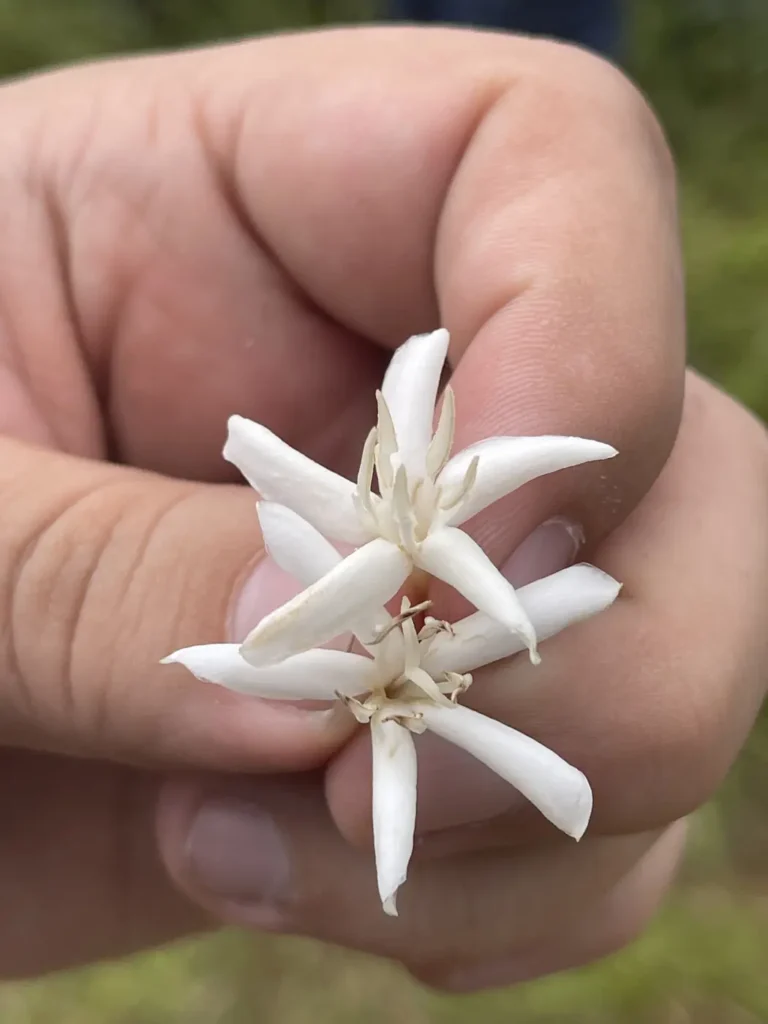
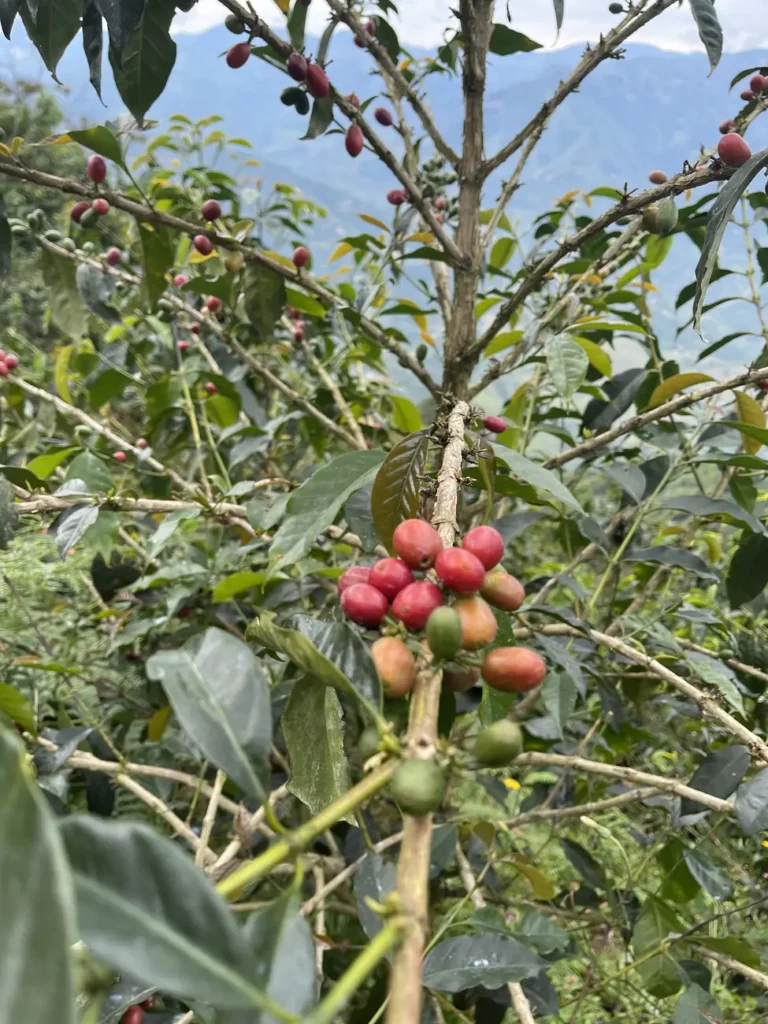
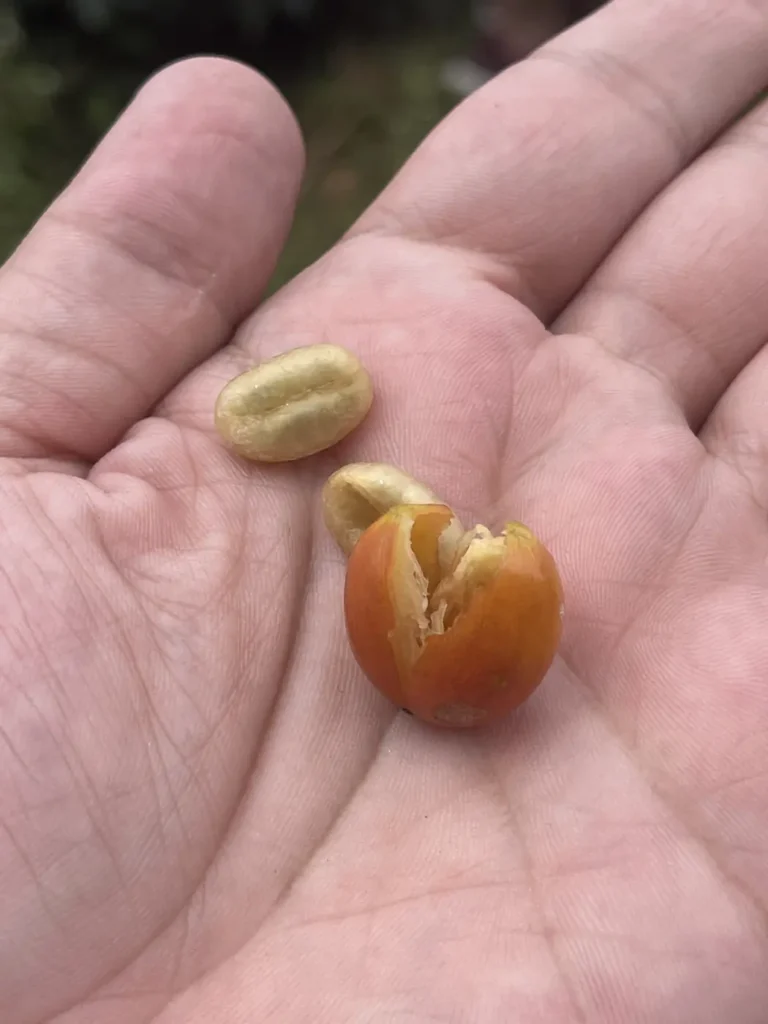
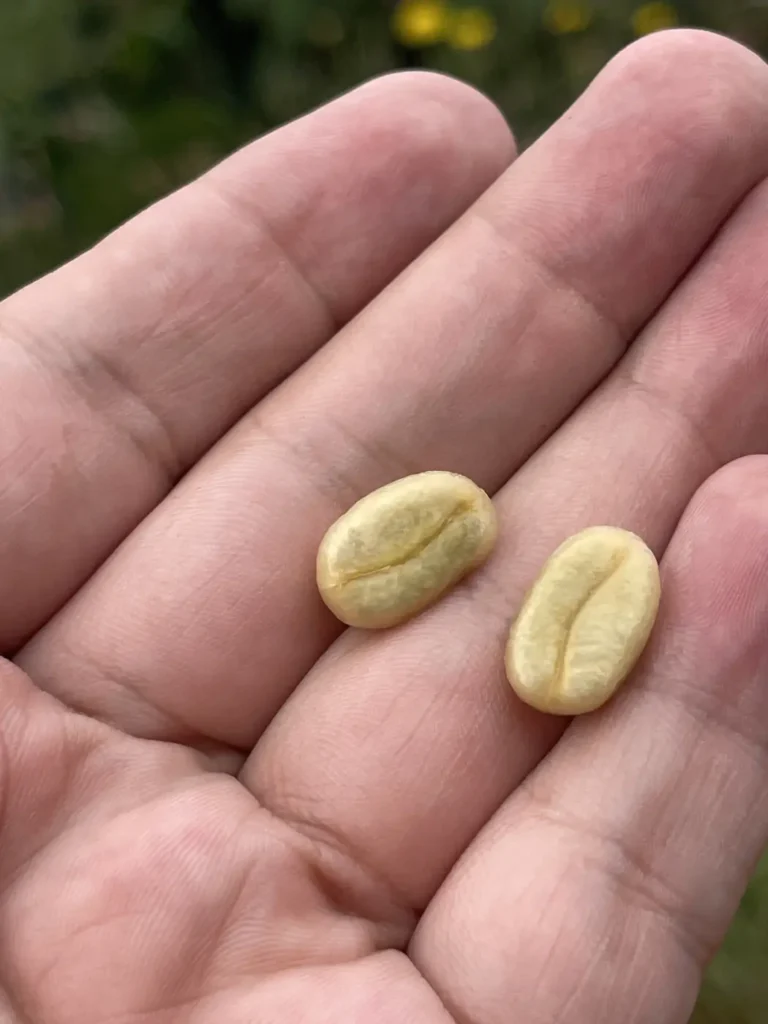
Eduardo pulled a cherry off a branch and squeezed it and two pale seeds slid into his palm. That is it. That is the product. Everything else — skin, pulp, the slick sugary layer around the seed — is packaging that somebody now has to remove, and every choice made in removing it will end up in the cup.
The people who actually pick it
Look hard at one branch and you will find green, yellow, orange and deep red on it at once. Perhaps a third of that is ready today. So a picker goes up the row and takes only the ripe ones, by hand, and leaves the rest, and comes back to the same tree in a week to do it again. Then again.
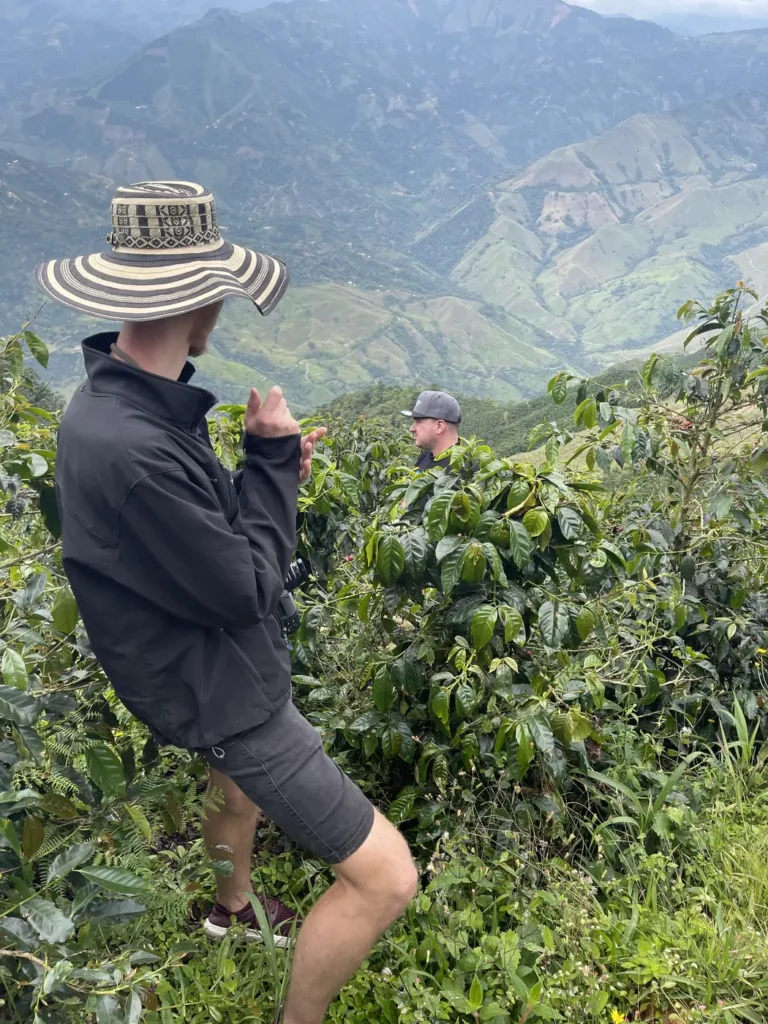
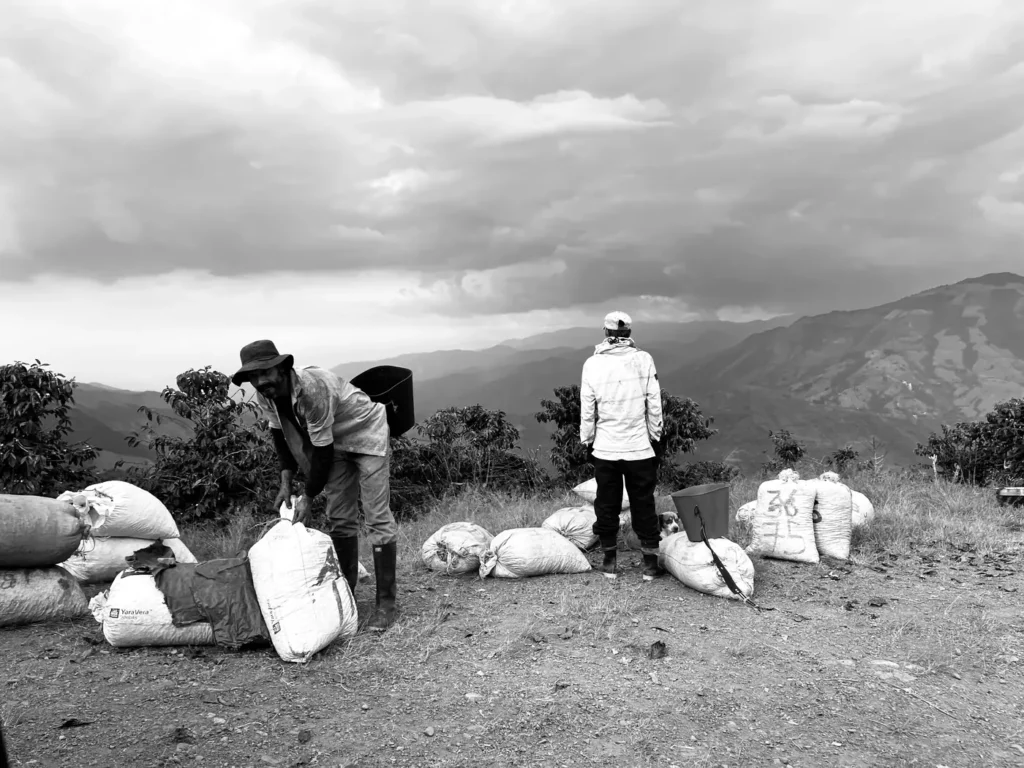
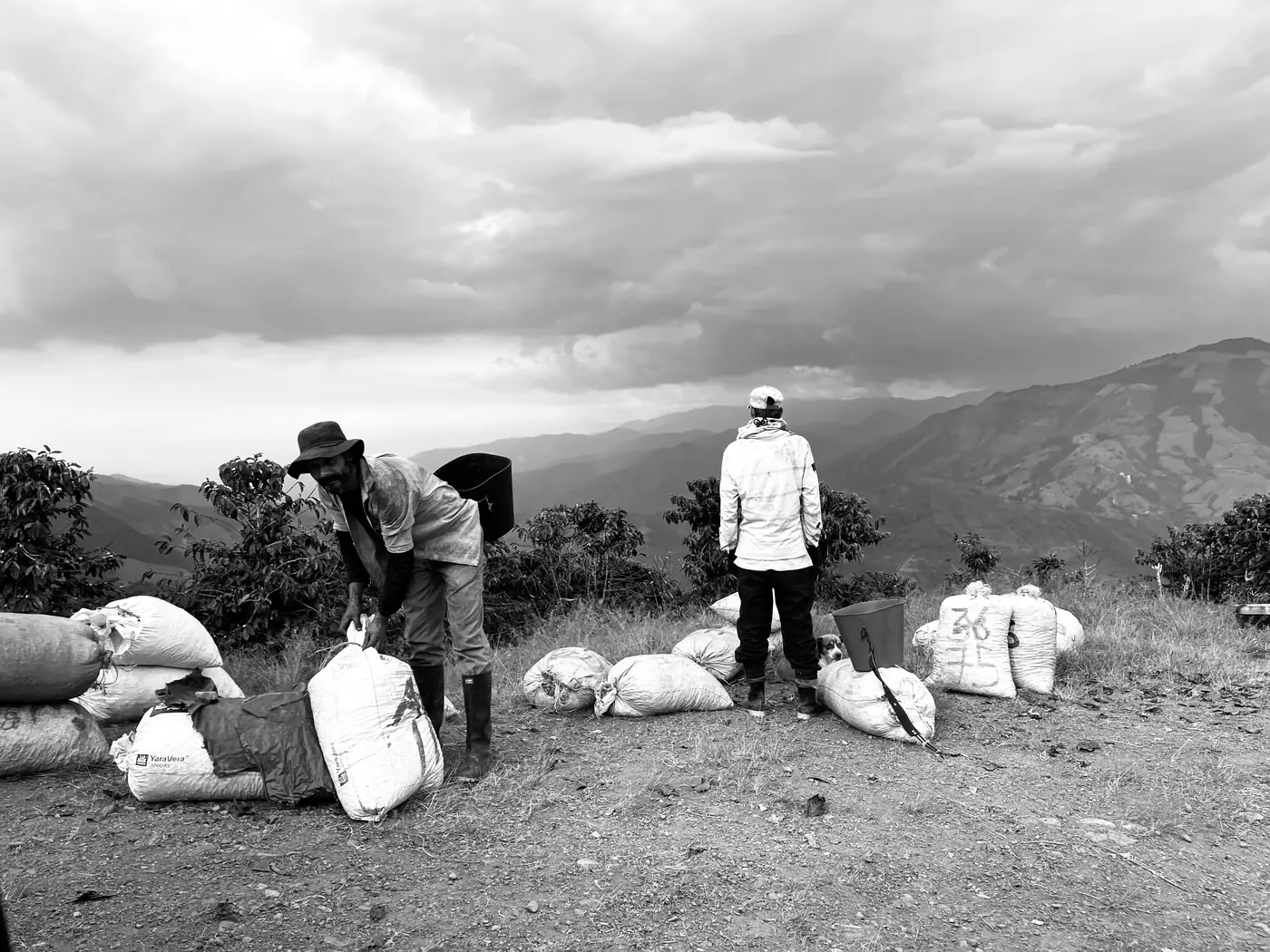
Selective picking is not a boutique flourish somebody dreamed up to justify a price. On this ground, on this plant, it is the only way to land a uniformly ripe lot — and it is the overwhelming majority of what a coffee like this costs. Not the roasting. Not the bag. Not me. The hours somebody spent on a forty-degree slope choosing individual pieces of fruit.
The picture above, of the sacks at the end of the day, is the one I keep coming back to. It is on the front page of this website. That is deliberate.
The mill, late afternoon
By the end of the day the picking comes down to the wet mill, and coffee stops being agriculture and becomes a process with a clock on it. Cherries go into the tanks. The depulper strips the skin and most of the fruit, and what comes out the far side is a seed in a parchment shell, coated in mucilage — the sticky, sugary layer that is the engine of everything that happens next.
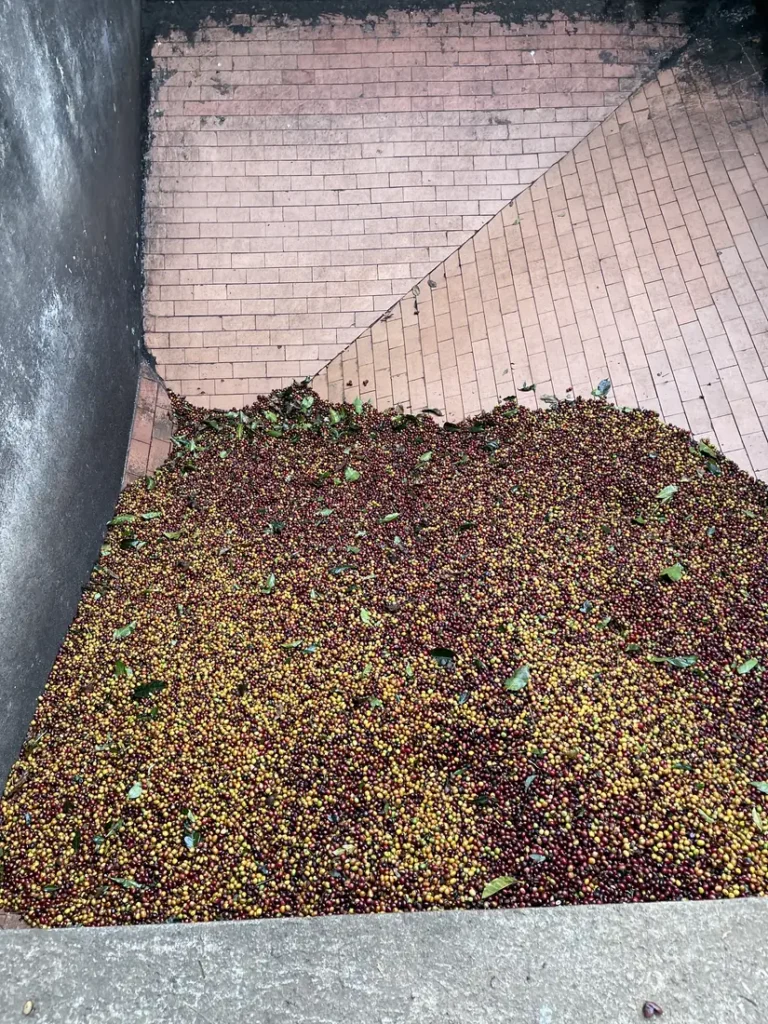
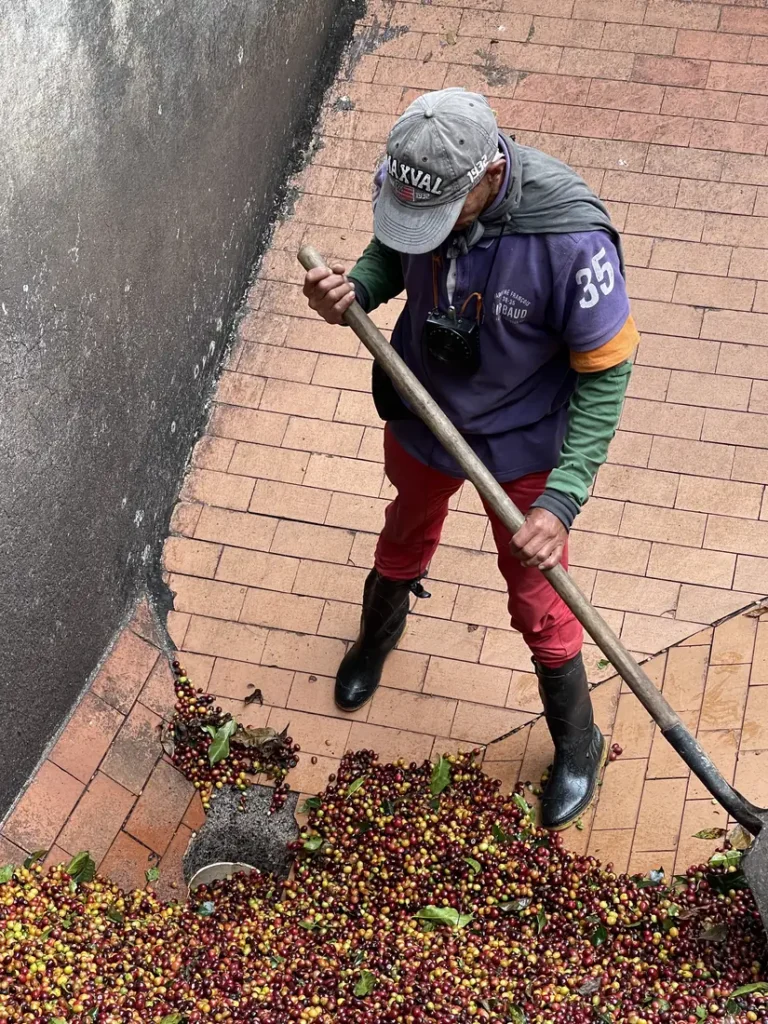
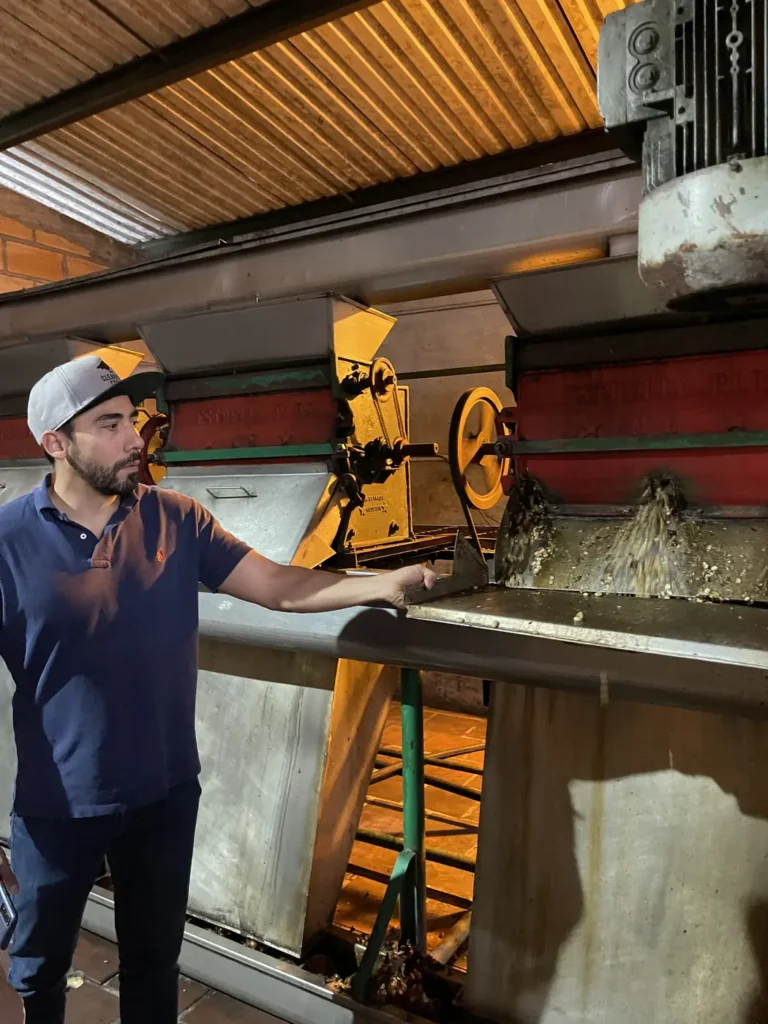
Left: depulped coffee and mucilage running down the channel. Right: moving the day’s picking through the mill.
It is loud, wet, and physical in a way that no amount of reading prepares you for. A man in rubber boots moves several hundred kilos of fruit with a shovel because that is the tool that works.
Some lots ferment in open tanks with air. Others go into sealed blue barrels with the oxygen shut out — anaerobic fermentation. Same farm, same trees, sometimes the same afternoon’s picking, and the two roads end up in genuinely different cups. Watching those lids go on was the moment “processing method” stopped being a line on a label to me and became what it actually is: a set of deliberate, irreversible, moderately risky decisions taken under time pressure by people who will not find out whether they were right for another month.
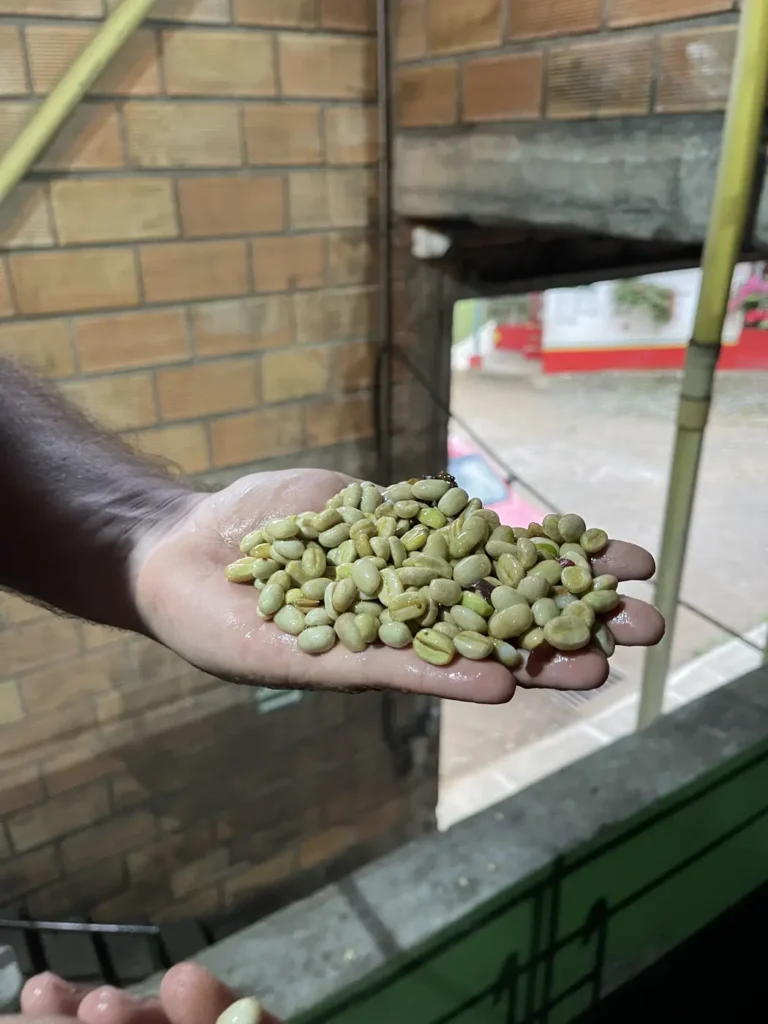
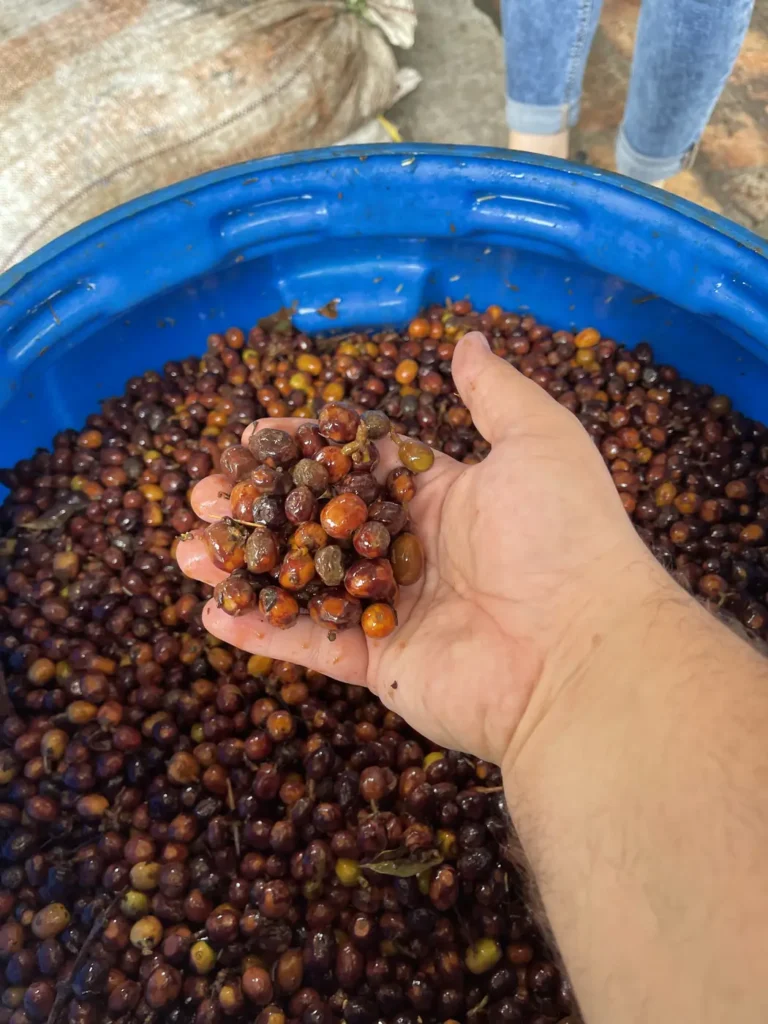
Slowly, on raised beds
Drying happens on raised wooden beds under greenhouse plastic, off the ground, with air moving underneath, turned by hand. Slow and even is the entire objective. Rush it and the coffee will not tell you today — it will tell you in four months, in a bag, in somebody’s kitchen, when it tastes tired and nobody can explain why.
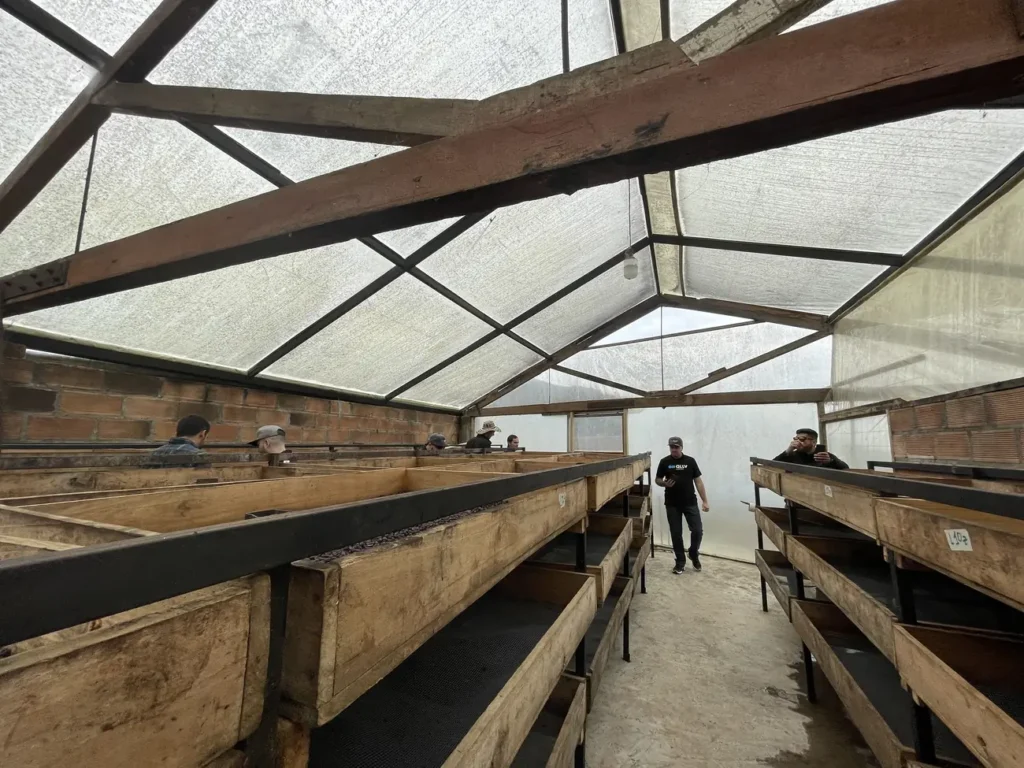
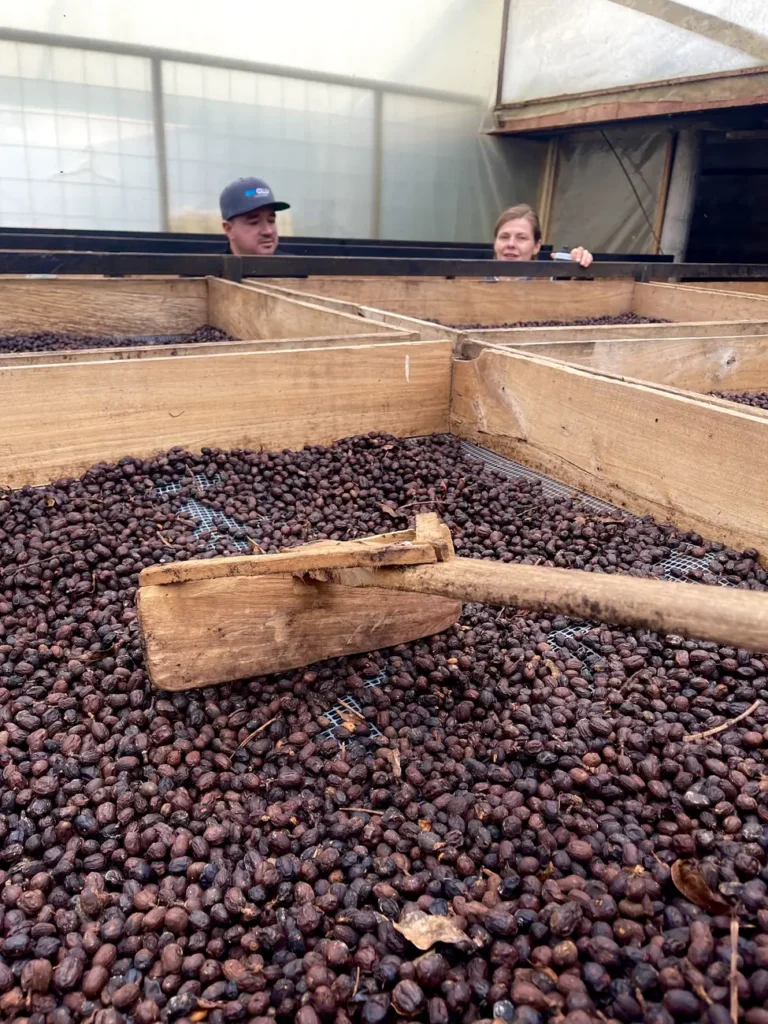
Parchment part-way through drying, the length of the drying house, and naturals going down whole.
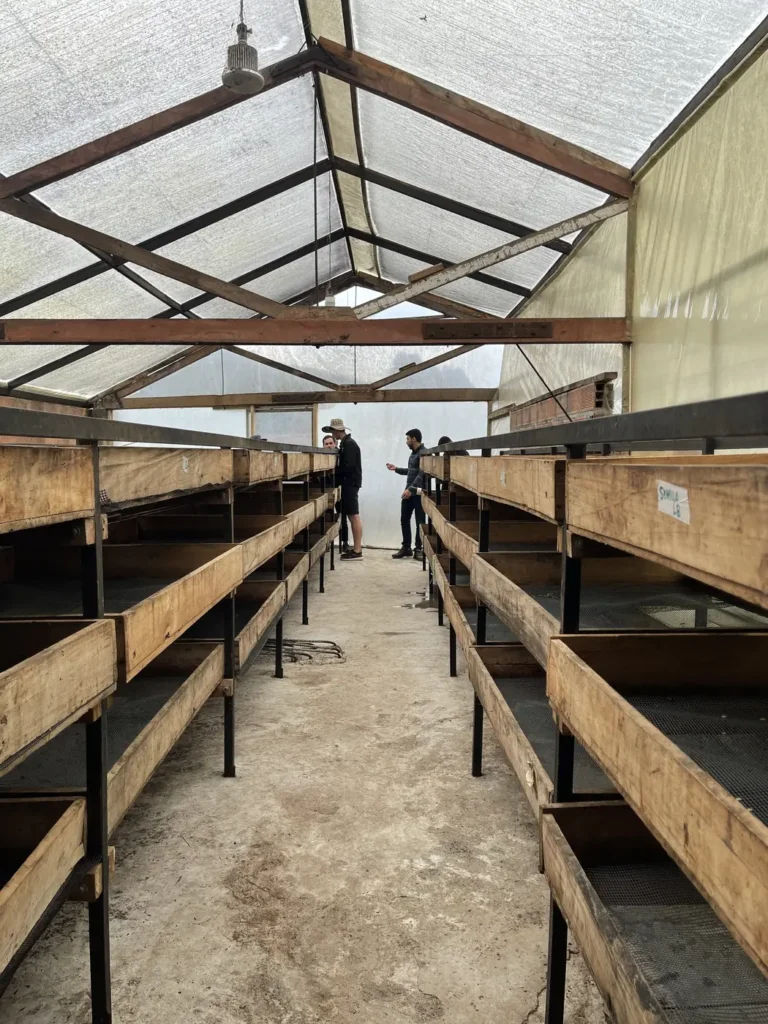
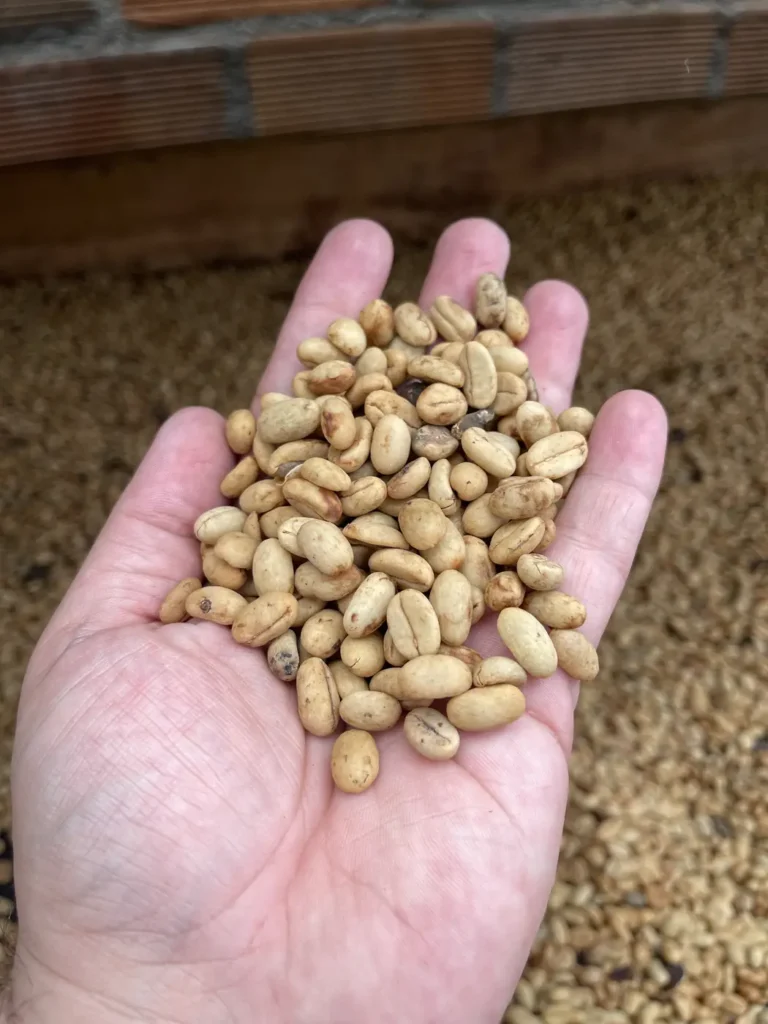
The naturals are the strange ones: whole cherries laid out with the fruit still on them, drying for weeks, the seed slowly taking on everything happening in the fruit around it. They look like something you would sweep up. They smell like raisins and red wine.
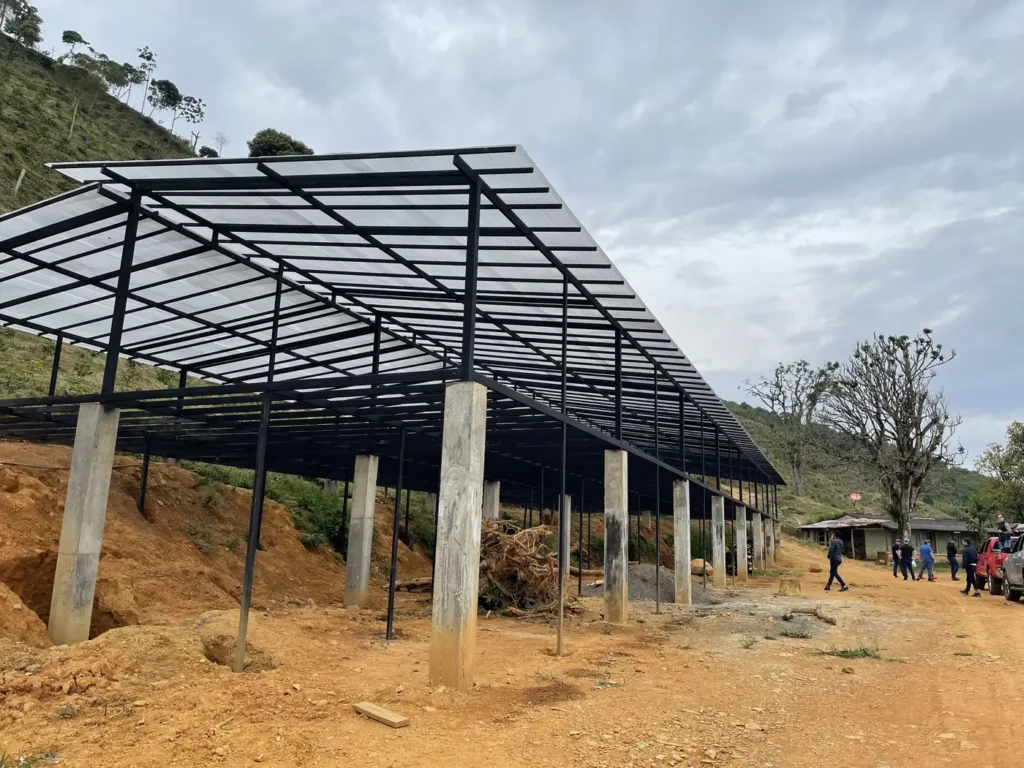
While we were there a second drying house was going up — bare steel frame on a fresh cut of red earth. Hold onto that detail. Capacity to dry slowly is the ceiling on how much specialty coffee a farm this size can make in a year, and Eduardo was spending real money to raise it.
The cupping table
Second morning. Ground coffee, hot water, four minutes, then you break the crust with a spoon and put your face in the steam that comes off it.
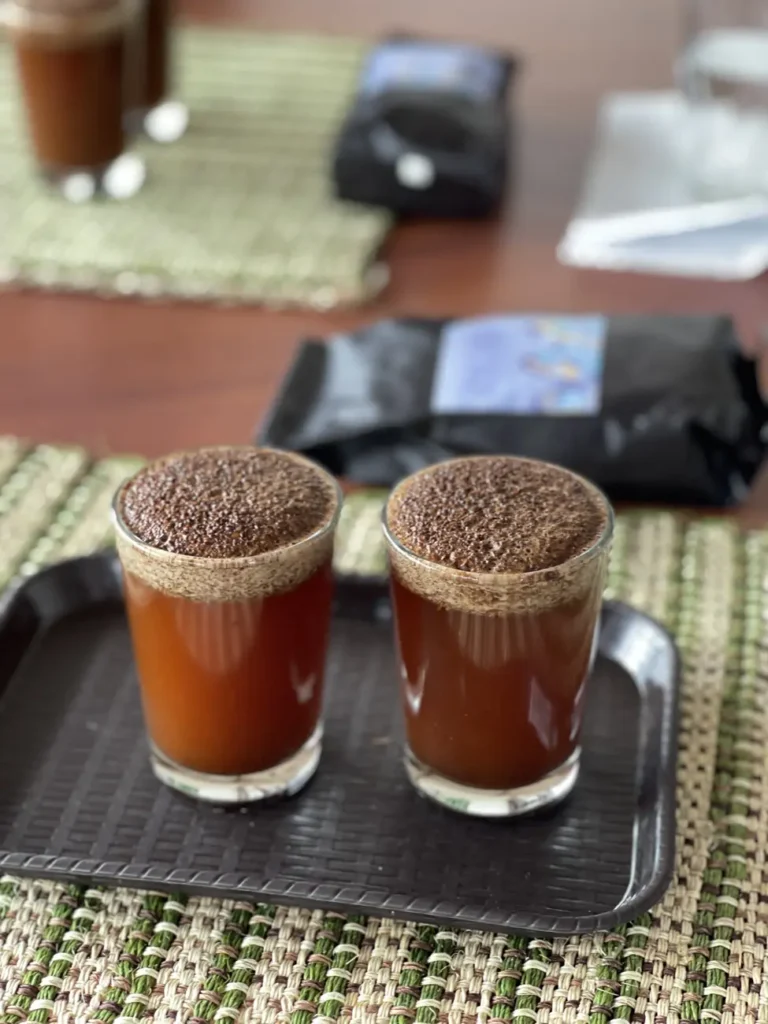
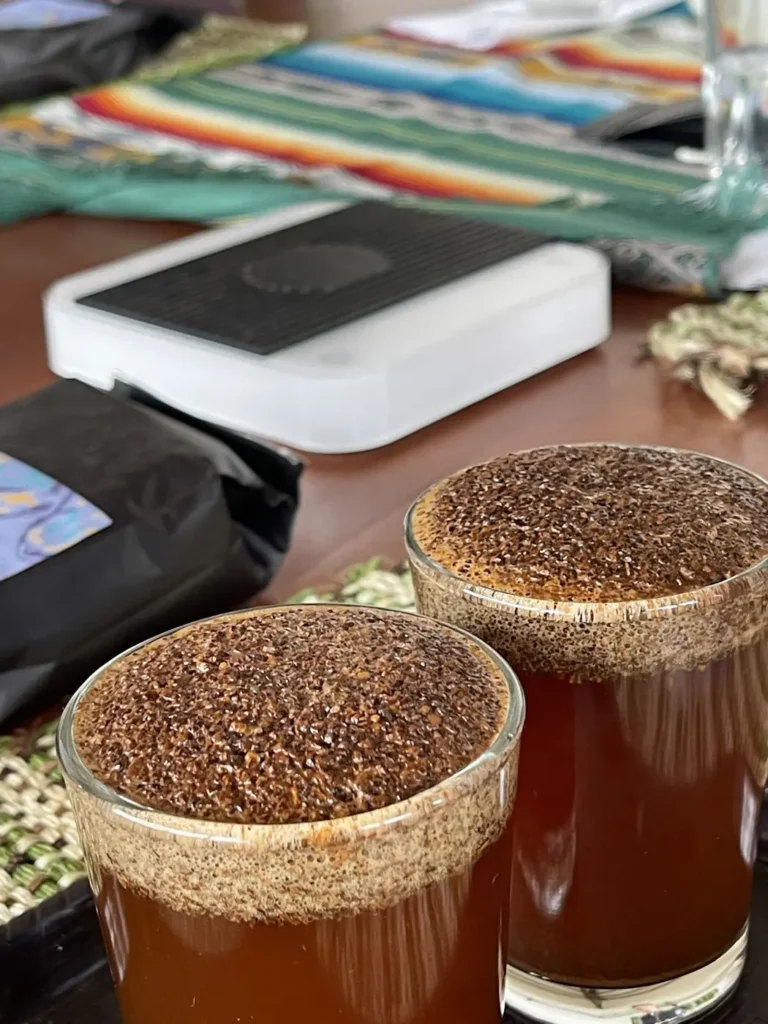
Filling the glasses, and the crust of soaked grounds that rises before you break it.
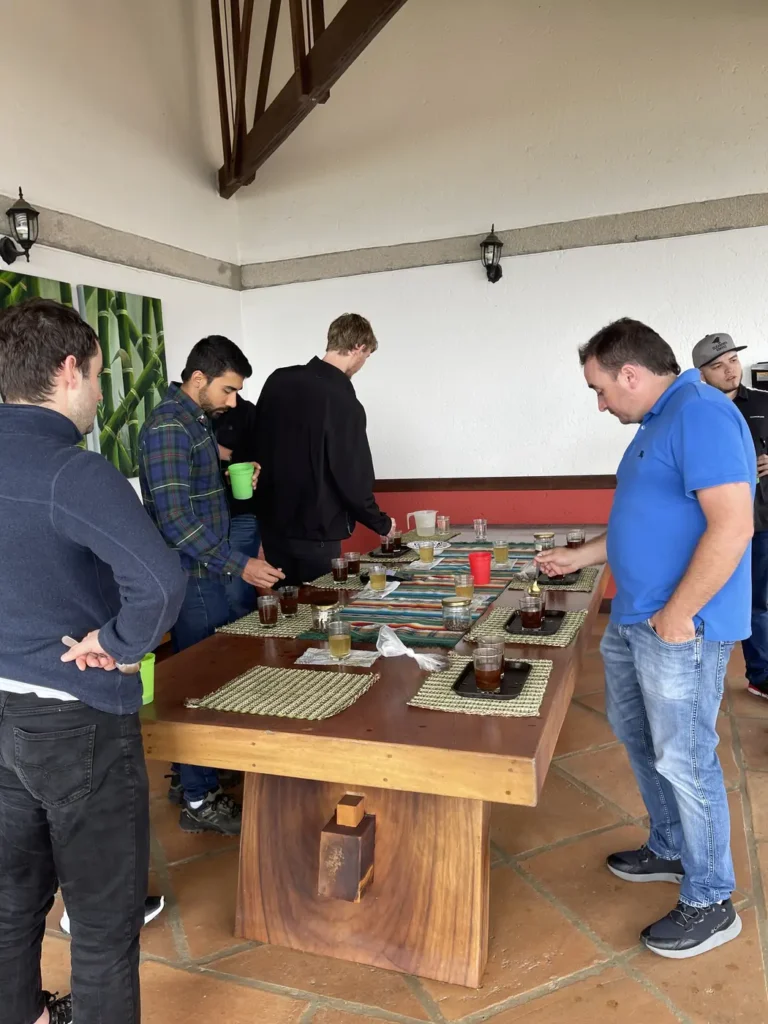
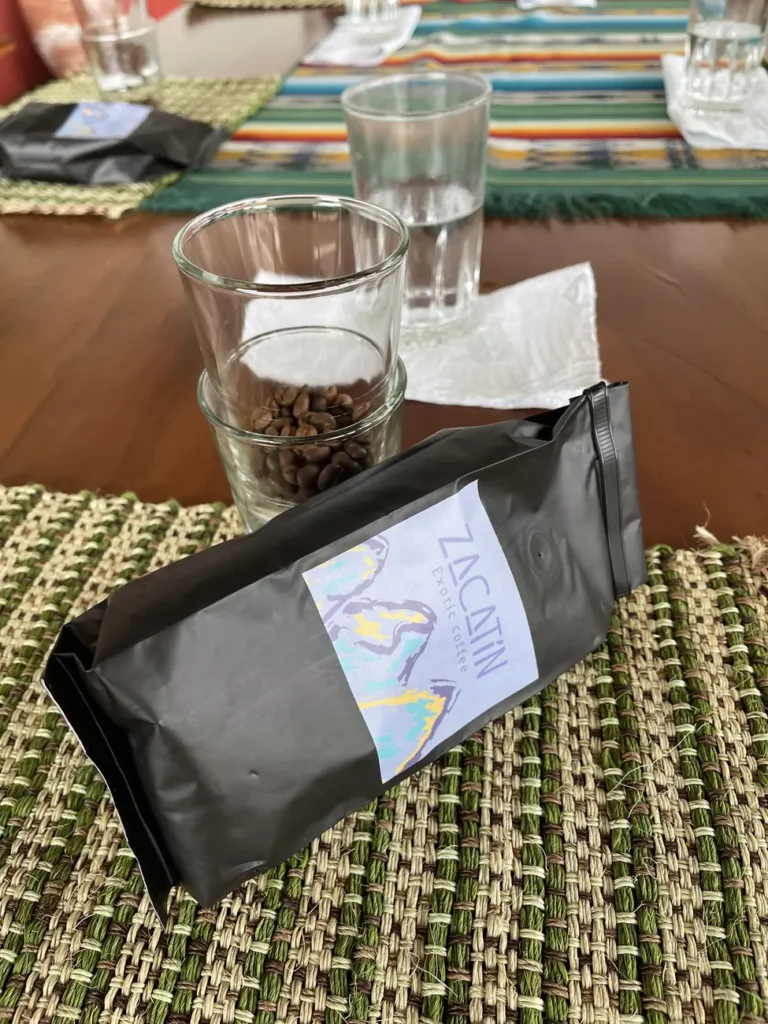
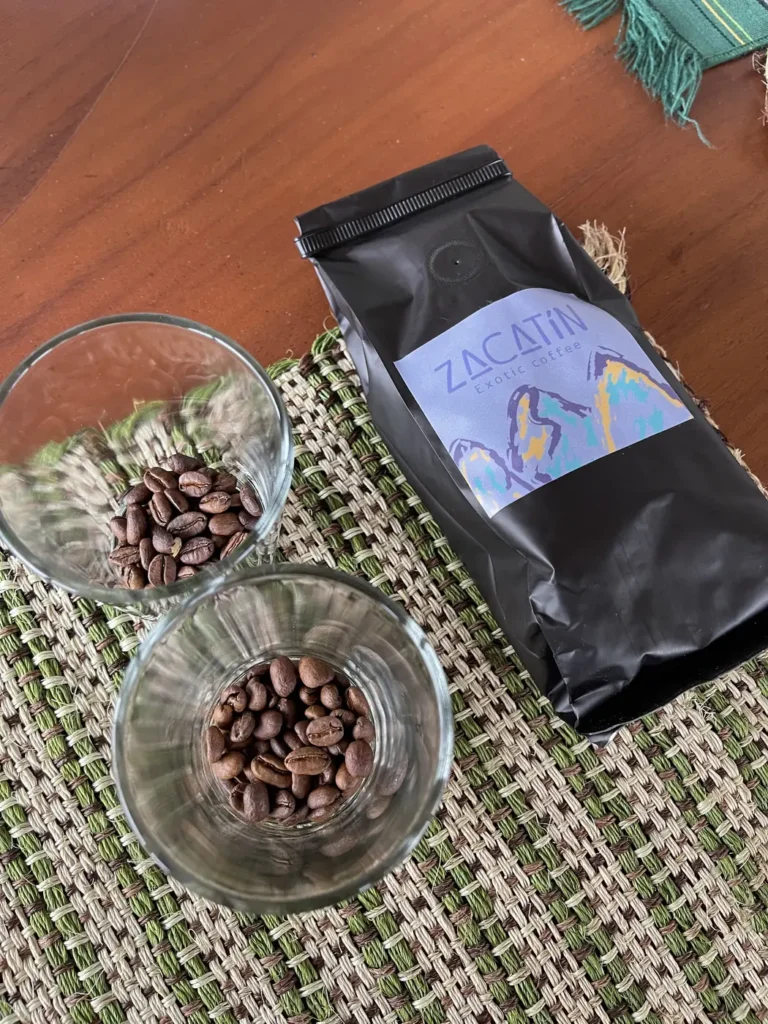
I have cupped a great deal of coffee in rooms with good lighting and bad windows. Doing it a few hundred metres from the trees, forty-eight hours after watching that exact fruit come off a branch and go into a barrel, is a different act. Not because the scores move. Because every note on the table suddenly has a name and a decision behind it. The anaerobic lot tasted like the barrels I had watched somebody seal.
The ridge
On the last afternoon we drove up to the high farm — the northwest end of that map — and walked out along a ridge until the town appeared below us, small and orange in the middle of an enormous amount of green.
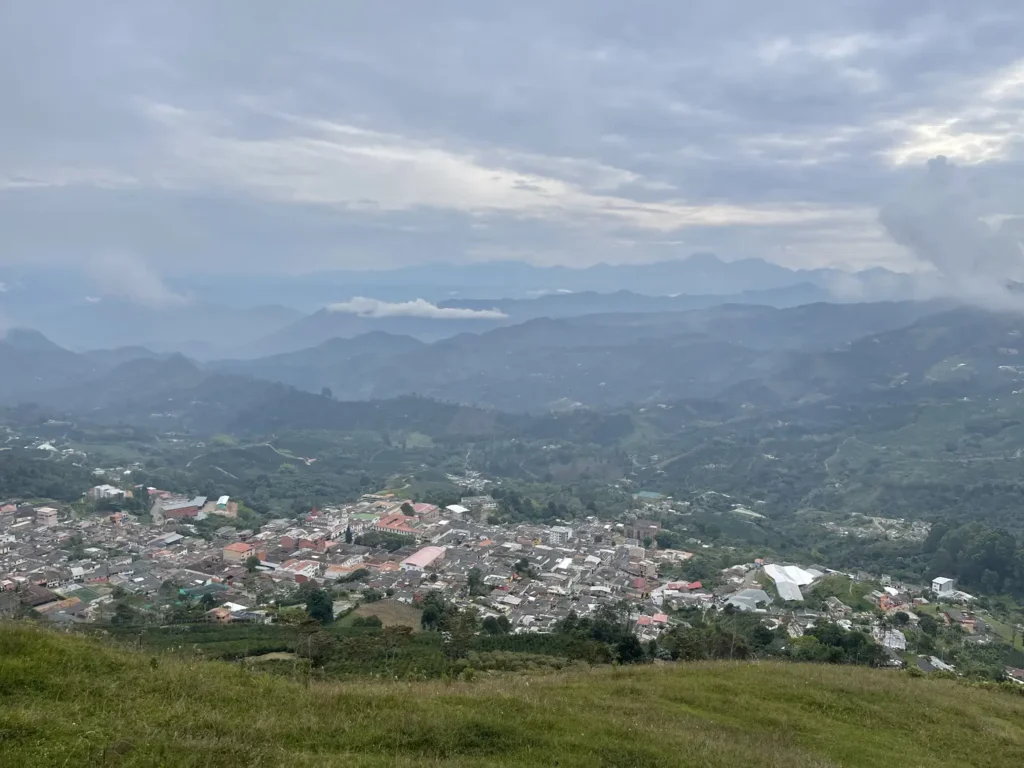
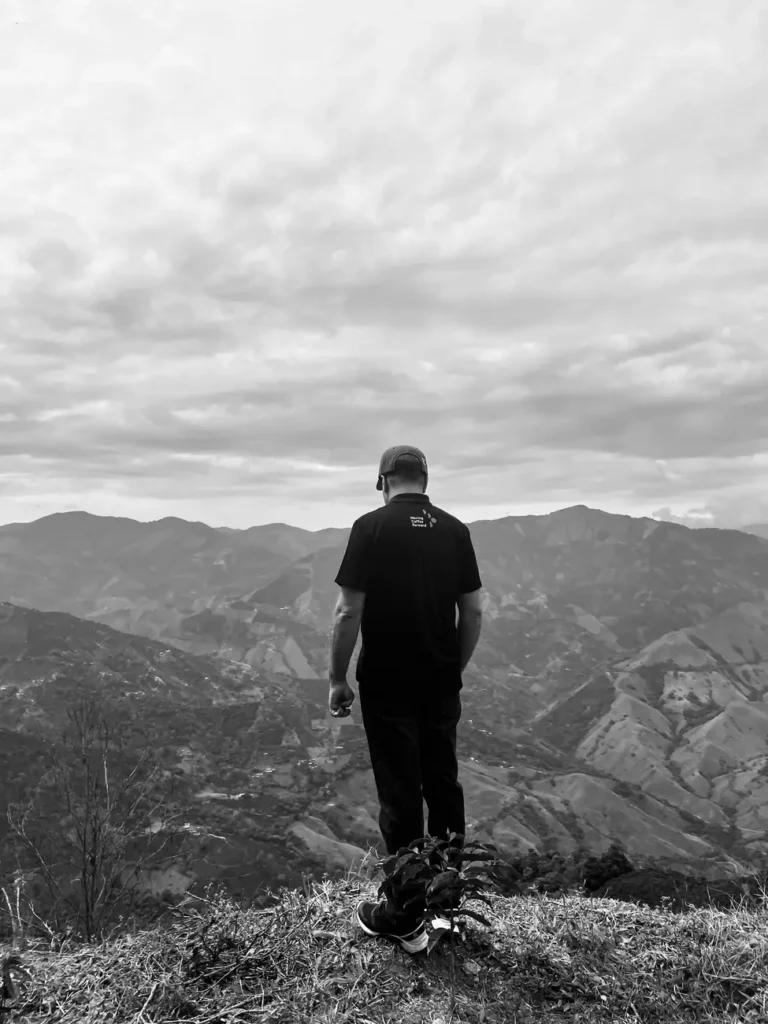
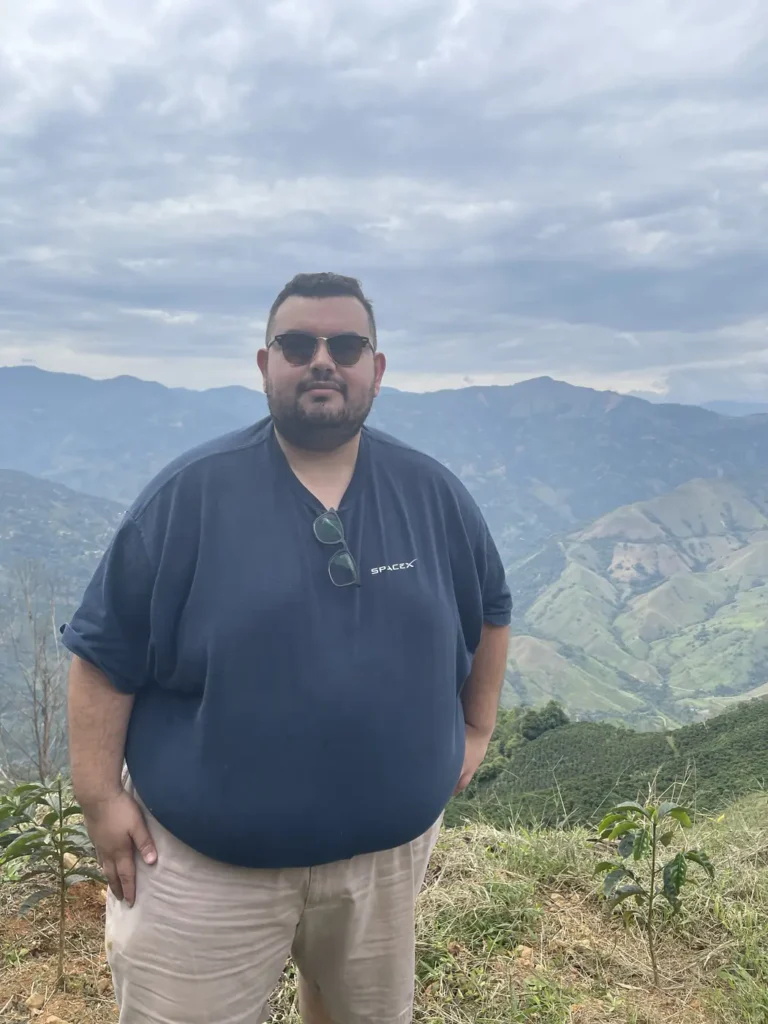
Here is what I took home, and it is not a warm feeling. It is a correction.
By the time green coffee gets to me in Miami, almost everything it is going to taste like has already been decided. Altitude decided some of it. Variety decided some. A picker decided a great deal of it, one cherry at a time, on a slope. Somebody decided how long a barrel stayed shut and how slowly a bed got turned. Roasting is real work, and I can absolutely ruin a coffee in eleven minutes. But it is the last short chapter of a book that was written somewhere else, over years, by other people’s hands.
That is why Molex carries three or four coffees at a time instead of thirty. Partly that is the honest constraint of one person and a small roaster. Mostly it is that I would rather be able to tell you where a coffee came from and what was done to it than hand you a long menu and a shrug.
And the other thing, the one I did not go looking for. I spent twenty-seven years being from a place I could not describe. I came back at thirty-five to look at a crop, and got the country thrown in — the switchbacks, the arequipe, the painted balconies, the specific quality of the light at four in the afternoon on a coffee slope in Antioquia. I went for the coffee. I would be lying if I said that was all I found.
Thanks to Henry for the invitation, and to Eduardo and everyone working at El Zacatín, who spent two days answering the questions of a man who had a great many of them.